A RICS level 3 building survey and a structural engineer’s report serve different purposes during a property purchase. A RICS level 3 building survey gives buyers a wider assessment of the property’s condition, visible defects, risks, and maintenance liabilities before exchange of contracts. A structural engineer’s report investigates a specific structural issue, such as cracking, movement, foundation concerns, or load-bearing elements. The distinction matters because the wrong inspection can leave important questions unanswered or lead to unnecessary specialist costs. The older term “full structural survey” has contributed to this confusion, but it should not be treated as the same service as a structural engineer’s report.
What Each Report Covers
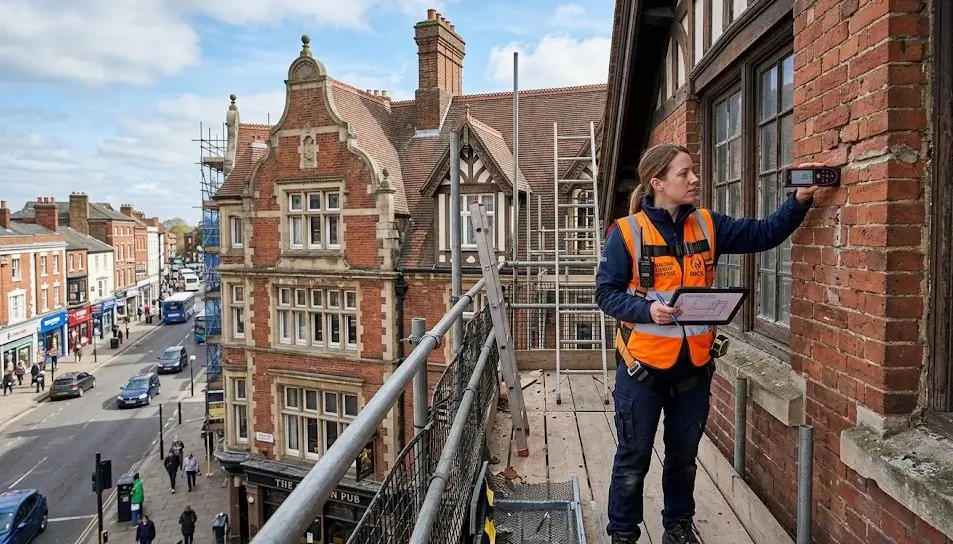
A RICS level 3 building survey is a surveyor-led assessment of the property’s overall condition, construction, visible defects, and future maintenance risks. It is the most comprehensive RICS home survey and is suited to older, larger, altered, listed, or structurally complex properties. The surveyor reviews accessible parts of the building and reports on issues such as damp ingress, timber deterioration, roof condition, visible structural movement, previous alterations, and areas where further investigation is advised before exchange of contracts.
A structural engineer’s report is an engineer-led investigation of a defined structural issue, such as movement, cracking, foundation concerns, roof spread, or load-bearing elements. It does not replace the broader property assessment provided by a RICS level 3 building survey.
Building Survey vs Structural Survey: Key Differences
The distinction between the two services lies primarily in scope and purpose. A RICS level 3 building survey supports wider purchase due diligence before exchange of contracts. A structural engineer’s report provides a technical assessment where a known or suspected structural defect requires engineering advice.
For buyers, the practical difference is the type of decision each report supports. A RICS level 3 building survey helps assess purchase risk across the property. A structural engineer’s report helps assess the cause, significance, and likely next steps for a defined structural matter.
During a RICS level 3 building survey, the surveyor reviews and reports on:
- Identifying visible defects, dampness, deterioration, and signs of structural movement.
- Examining the condition of the property’s main structural, external, and internal elements where accessible.
- Reviewing visible alterations, extensions, and previous repair work.
- Highlighting maintenance issues and areas where further investigation is advised.
- Providing practical advice on repairs, future maintenance, and potential risks before purchase.
A RICS level 3 building survey is suited to purchases involving:
- Older properties
- Listed buildings
- Larger homes
- Altered or extended properties
- Non-standard construction
These properties present a higher level of survey risk because age, construction type, alteration history, damp ingress, previous repairs, and visible movement can affect condition and future liability. A detailed survey helps identify visible defects and risk indicators before exchange of contracts, reducing the risk of unexpected repair, maintenance, or structural costs after completion.
A structural engineer’s report is a targeted engineering assessment arranged where a specific structural issue requires technical diagnosis. This may include investigation of:
- Significant cracking
- Progressive movement within the building
- Suspected subsidence or settlement
- Foundation issues
- Roof spread
- Load-bearing walls
- Structural alterations
The report assesses the likely cause and significance of the issue. Where required, the structural engineer can recommend monitoring, remedial design, structural repairs, opening-up works, or further testing.
The table below shows the main differences more clearly.
| Feature | RICS level 3 building survey | Structural engineer’s report |
| Conducted by | RICS-qualified surveyor | Structural engineer |
| Primary purpose | Wider pre-purchase condition assessment | Technical assessment of a defined structural issue |
| Scope | Accessible elements across the property | Specific structural element or defect under instruction |
| Maintenance issues | Reports visible maintenance risks within the survey scope | Addresses only where relevant to the structural issue |
| Damp and visible defects | Considers visible damp, deterioration, and related risk indicators | Considers only where relevant to structural performance |
| Visible services | Visual review only, without testing | Outside scope unless directly relevant to the structural issue |
| Typical use | Purchase due diligence before exchange of contracts | Follow-up advice where structural risk is identified |
| Appropriate for | Buyers needing wider condition advice | Buyers needing a specialist engineering opinion |
Structural Survey vs Building Survey: Why the Terms Are Confusing
Much of the confusion comes from older terminology still used in the property market. For many years, buyers and agents referred to a detailed building survey as a “full structural survey”. Although RICS no longer uses that term, it still appears in conversations with buyers, estate agents, and mortgage advisers. It should not be read as the same service as a structural engineer’s report.
The distinction is clearer when each report is viewed by professional output.
A RICS level 3 building survey provides:
An assessment of the property’s overall condition, visible defects, maintenance liabilities, and areas where further investigation may be needed before purchase.
A structural engineer’s report provides:
Technical advice on the cause, significance, and likely remedy for a specific structural defect or stability issue.
This difference changes the purpose of the inspection, the professional involved, and the type of advice the buyer receives.
Which Survey Should You Choose?
The appropriate inspection depends on the property’s condition, age, alteration history, visible risk indicators, and level of uncertainty before purchase. Where the buyer needs a wider understanding of an older, altered, listed, non-standard, or poorly maintained property, a RICS level 3 building survey is the appropriate starting point, particularly where building survey advice for renovation projects is needed.
Where there are large cracks, evidence of movement, suspected subsidence, foundation concerns, roof spread, or uncertainty about structural alterations, the appropriate next report is a structural engineer’s report. This gives the buyer specialist engineering advice on the identified issue before exchange of contracts.
The table below shows the appropriate starting point in different situations.
| Your situation | Recommended inspection |
| Buying an older property | RICS level 3 building survey |
| Purchasing a listed building | RICS level 3 building survey |
| Concerned about the general condition | RICS level 3 building survey |
| Large cracks are visible | Structural engineer’s report |
| Subsidence or settlement is suspected | Structural engineer’s report |
| Structural alterations need assessment | Structural engineer’s report |
| Unsure whether a structural issue exists | RICS level 3 building survey first |
In some purchases, both reports are appropriate, but not for the same purpose or at the same stage. The RICS level 3 building survey gives the buyer wider condition advice. The structural engineer’s report gives technical advice on a specific structural matter.
RICS Level 3 Building Survey vs Structural Inspection: Which Comes First?
The sequence matters because each report supports a different stage of professional advice. Where the buyer needs a wider view of the condition, the RICS level 3 building survey comes first. It helps identify visible defects, maintenance risks, and signs of deterioration before the buyer commits to the purchase.
If the survey identifies signs of movement, cracking, foundation problems, or another structural defect, the surveyor can recommend further advice from a structural engineer.
This approach gives the buyer a broader property context before paying for specialist engineering advice. Arranging a structural engineer’s report first can result in a detailed answer on one issue, while other defects elsewhere in the building remain unassessed.
Final Thoughts
The choice between a RICS level 3 building survey and a structural engineer’s report affects risk, cost, and the buyer’s ability to resolve uncertainty before the exchange of contracts. The issue is not which report sounds more detailed, but which report answers the right question at the right stage of the purchase.
Where the concern is the wider condition of the property, a RICS level 3 building survey gives the buyer the appropriate starting point. Where a specific structural defect has already been identified, a structural engineer’s report provides the technical diagnosis and recommendations needed before proceeding.
Frequently Asked Questions
Does a structural survey replace a homebuyer report or a building survey?
A structural engineer’s report does not replace a RICS home survey because it addresses a specific structural defect or stability question, not the wider condition of the property. A RICS level 2 home survey or RICS level 3 building survey considers broader purchase risks within its survey scope. Where the buyer needs general condition advice, the appropriate starting point remains a RICS home survey.
Are structural engineers and surveyors from the same organisation?
RICS surveyors and structural engineers belong to different professional disciplines. A RICS surveyor assesses property condition, visible defects, maintenance risks, and matters requiring further investigation. A structural engineer provides specialist advice on structural stability, load-bearing elements, movement, foundation issues, and structural repair options.
Can a building survey recommend specialist reports other than structural inspections?
A RICS level 3 building survey can recommend specialist reports where the surveyor identifies issues outside the survey scope or requiring technical investigation. This may include electrical, drainage, timber, roofing, damp, asbestos, or structural engineering advice. These recommendations help the buyer obtain the right specialist input before exchange of contracts, rather than relying on assumptions about unresolved risks.