
- Damp Survey
Professional Damp Surveys
Staining, mould growth, peeling finishes and damp patches are issues many property owners encounter. While the signs themselves may be obvious, the reasons they have developed are not always clear.
Fitzgerald Surveying carries out independent damp surveys for residential and commercial properties. Our surveyors examine the affected areas, consider the construction and the building’s condition, and provide a detailed report setting out their findings.
- Experienced, independent damp surveyors who are members of RICS, RPSA, CIOB and FODCS
- Instructed by homeowners, prospective purchasers, landlords, and property professionals across South East England and London
- Moisture investigations supported by thermal imaging technology
- Residential and commercial property inspections across South East England and London
- Instructed by homeowners, prospective purchasers, landlords, and property professionals across South East England
- Detailed written reports with photographic evidence, written in plain English for non-specialist readers
- Book Your Property Survey…
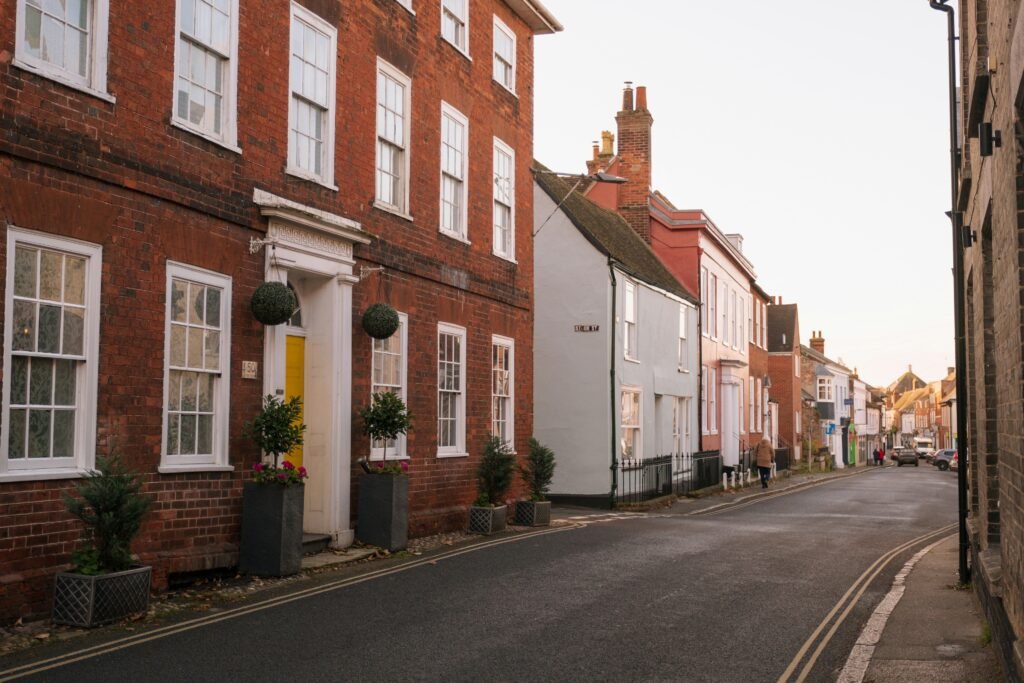
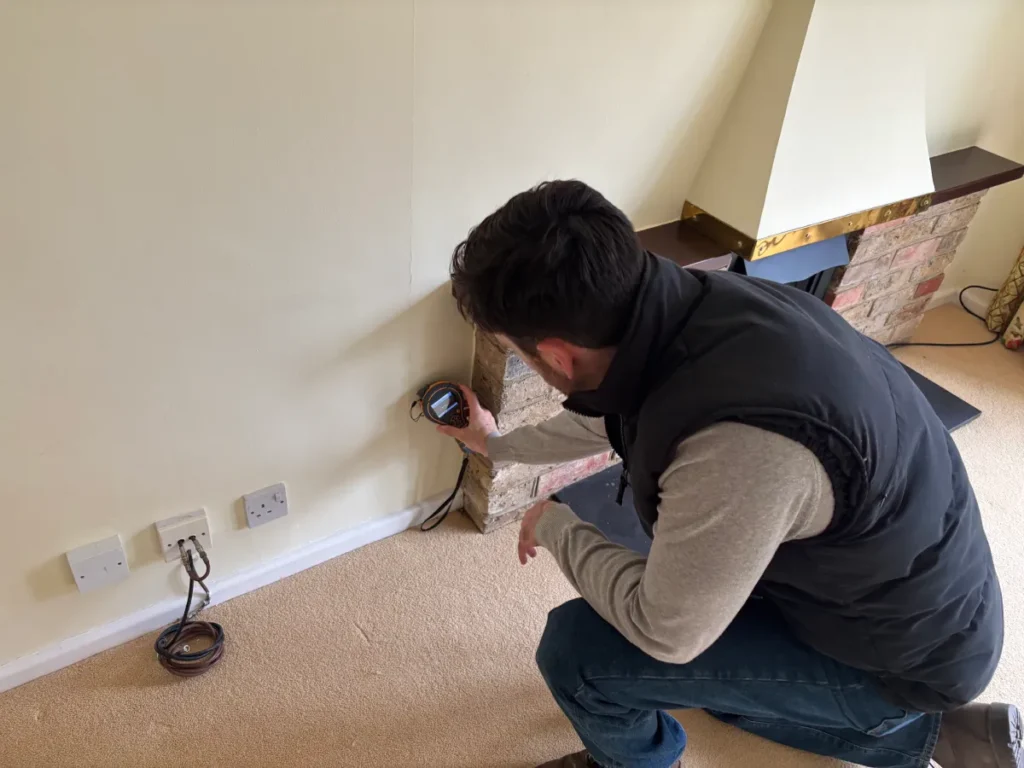
- About Damp Survey
What Is a Damp Survey
A damp survey is a specialist inspection that investigates moisture-related issues within a property and the factors that contribute to them. Visible signs of damp do not always reveal the underlying cause. Moisture can enter a building through defective external elements, plumbing issues, condensation, alterations, or maintenance defects. Identifying the source requires more than a visual observation of the affected area.
Our damp surveyors consider how the property has been built, maintained, and used over time. Age, construction methods, previous alterations, and visible defects can all influence the movement of moisture within a building.
We carry out residential damp surveying for homes, flats, rented properties, and property purchases. A house damp survey may be commissioned where damp has become a concern during occupation, before exchange of contracts, or following observations raised during a wider property inspection.
Fitzgerald Surveying provides independent assessments for clients who require a clear understanding of the cause and extent of damp within a property. We examine the available evidence, place the observed defects in context, and provide a professional opinion based on the property’s condition.

- Get Your FREE Smart Buyer’s Guide For Homebuyers
Enter your email address below to get FREE instant access to our checklist!
- Your email address will never be shared. By submitting this form you are agreeing to receive messages from Fitzgerald Surveying
- Key Benefits
Types of Damp Problems We Diagnose
Moisture can affect buildings in several different ways. Water may enter through external defects, develop as condensation, or affect lower wall areas. Understanding the type of damp present is an important part of the survey.
Penetrating Damp Survey
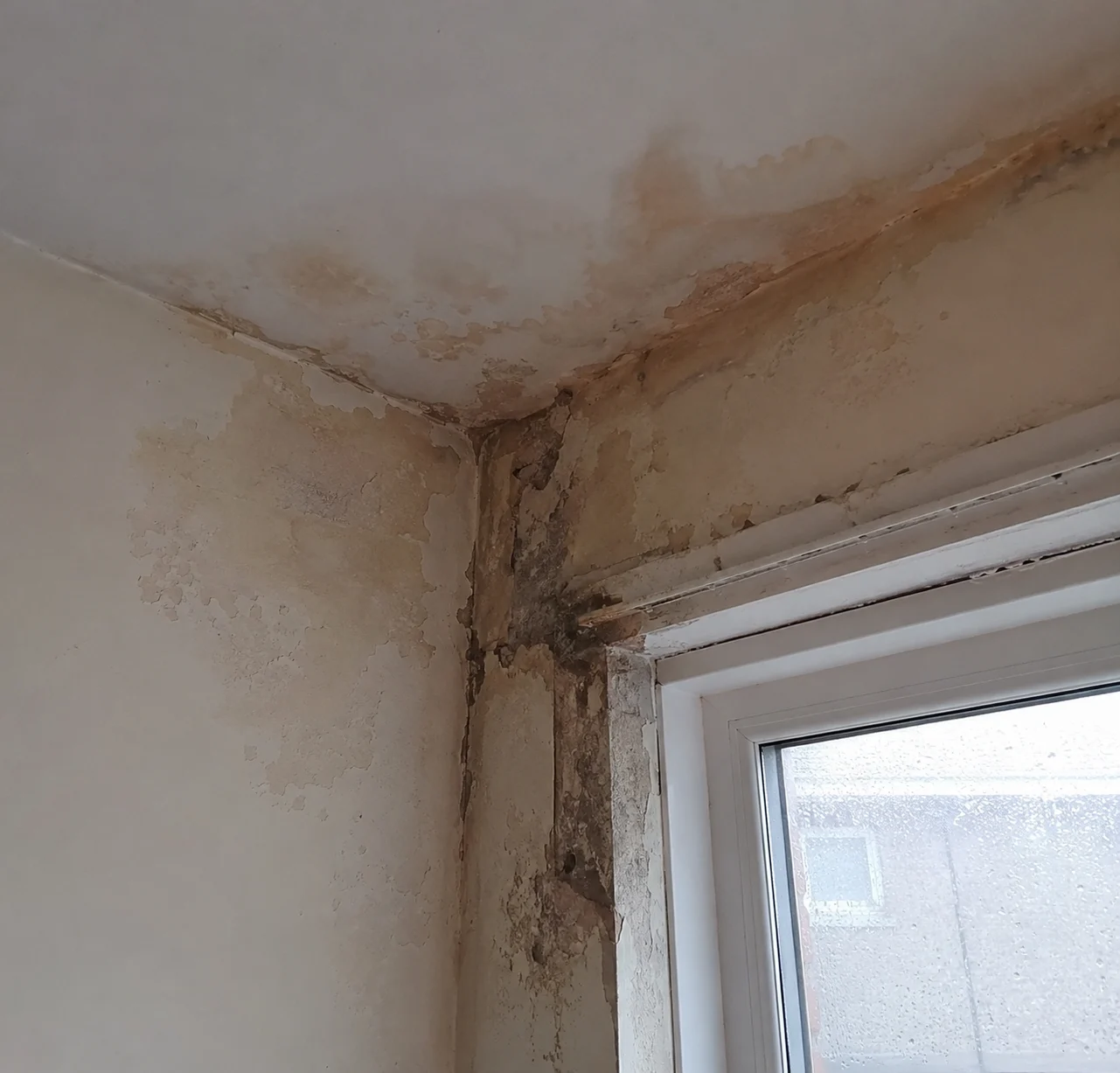
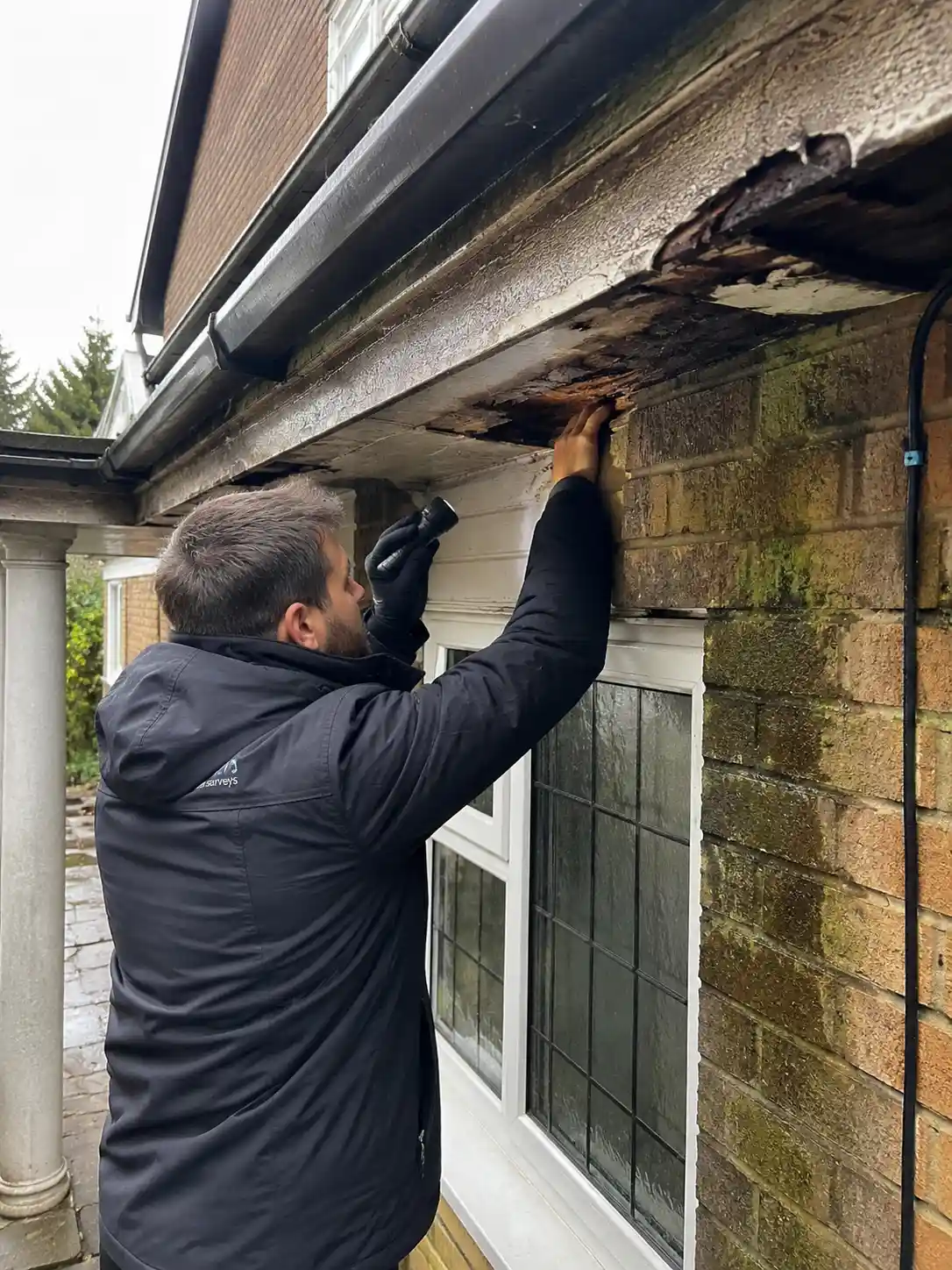
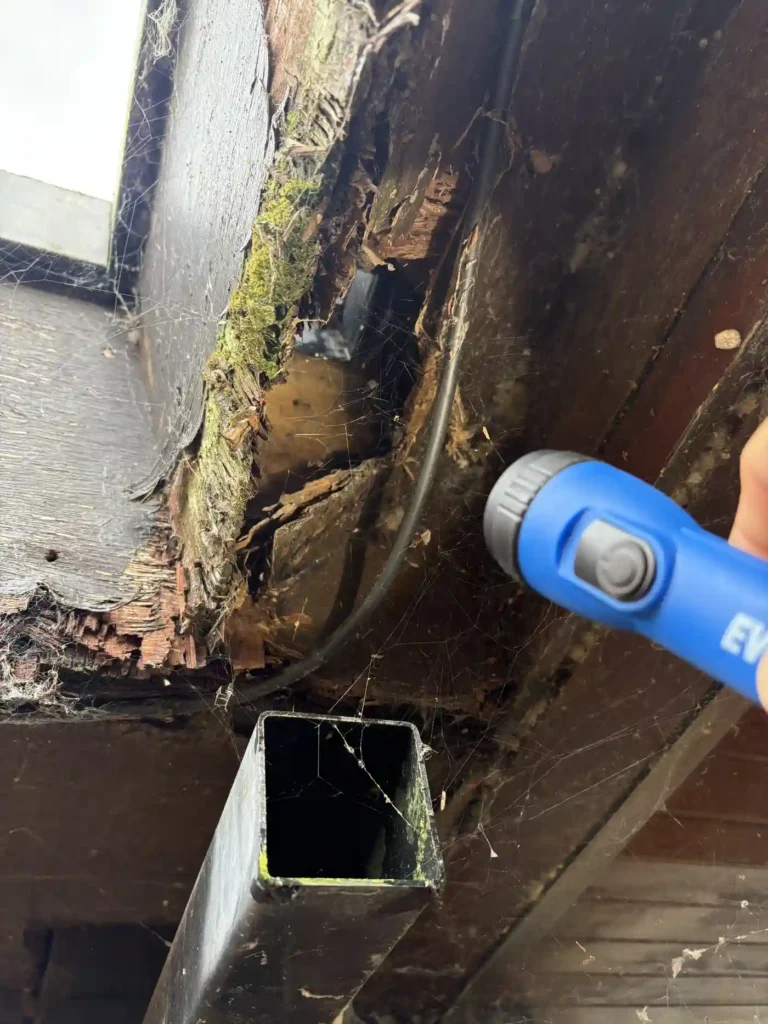
Water entering through walls, roofs, and windows can cause staining and localised deterioration. Left unaddressed, persistent moisture ingress can cause deterioration of internal finishes, embedded timbers, and masonry over time. A penetrating damp survey focuses on identifying defects that may allow moisture to enter the building.
- Moisture ingress observations
- External defect assessment
- Practical recommendations
Rising Damp Survey
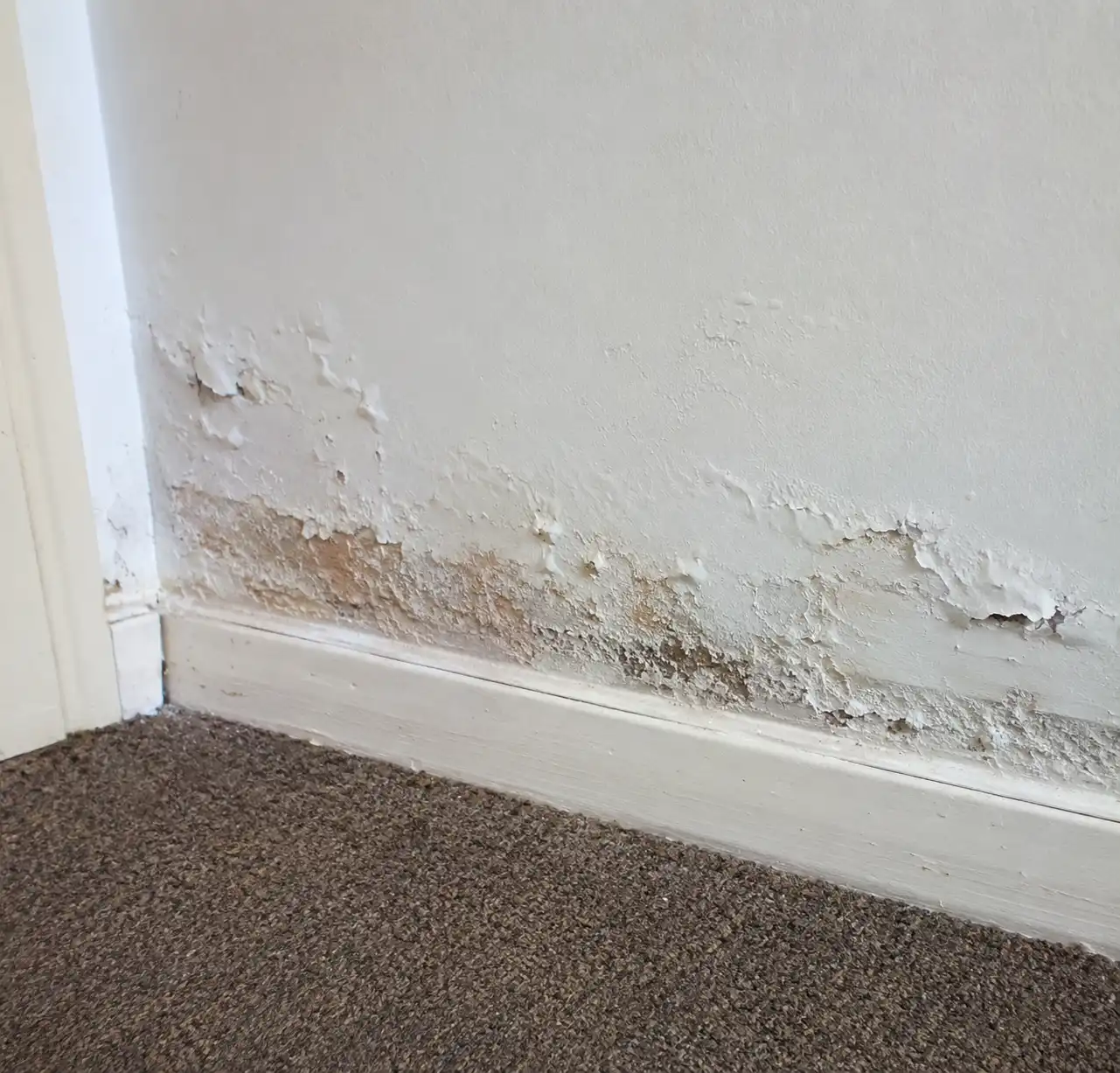
Rising damp is typically associated with failed or absent damp proof courses and can affect wall plaster, timber skirtings, and internal finishes at lower levels. A rising damp survey considers visible signs, construction details and ground-level conditions affecting the base of walls.
- Lower wall moisture assessment
- Damp proof course observations
- Ground-level moisture concerns
Recurring mould growth and excess moisture can affect internal living conditions. Where ventilation is inadequate and moisture levels remain elevated, mould growth can affect air quality and internal surfaces across multiple rooms. A condensation survey considers ventilation, airflow and other factors that contribute to mould and condensation.
- Ventilation and airflow review
- Condensation-related observations
- Dampness and mould assessment
- Report Overview
What's Included in Your Damp Surveys Report
A professional damp survey provides more than a record of visible defects. The report brings together site observations, moisture investigations and building assessments to help explain the likely causes of damp-related concerns within the property.
- External Building Condition Review
- Internal Property Inspection Findings
- Moisture Readings and Investigation Results
- Ventilation and Condensation Assessment
- Damp Proof Course Observations (where applicable)
- Timber Condition and Associated Defects
- Photographic Evidence and Supporting Notes
- Detailed Damp Report with Findings and Recommendations
- Project Insights
Detailed Damp Survey Case Studies
We deliver accurate damp surveys across all property types, helping clients understand moisture issues clearly and make confident, informed property decisions.
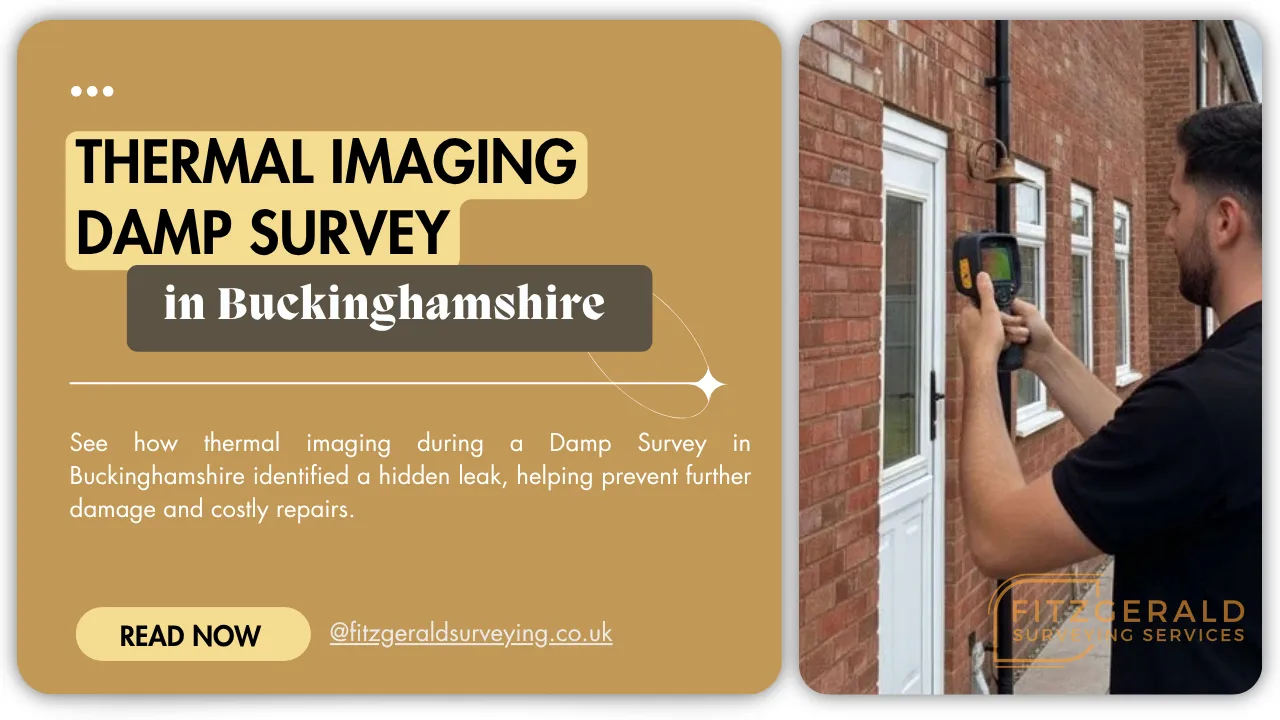
Fitzgerald Surveying Services conducted a thermal imaging damp survey in a modern Buckinghamshire apartment to investigate the cause of an odour. Our non-invasive inspection successfully identified an active hidden leak, preventing further damage and costly repairs.
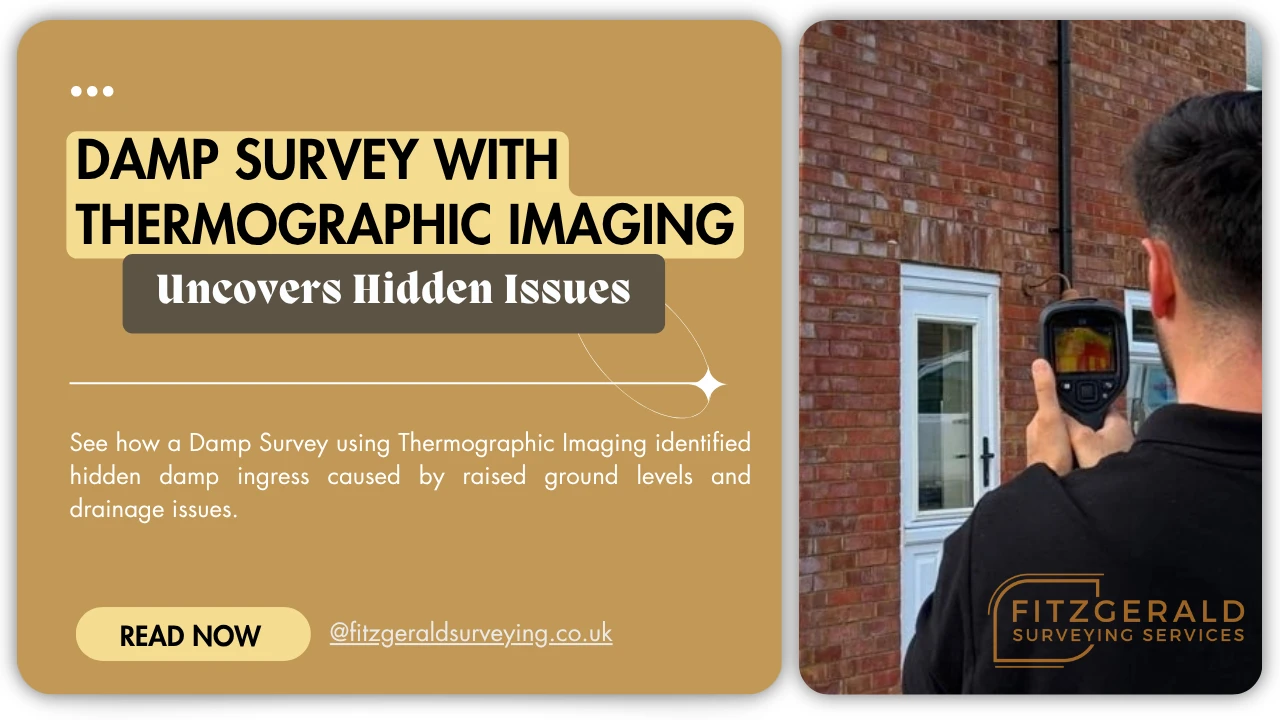
Subtle damp odour and minor discolouration prompted the client to seek expert help. Using advanced thermographic imaging as part of our damp survey process, we were able to detect issues hidden beneath the surface.
- Why Choose Us
Why Choose Our Damp Survey Experts
Fitzgerald Surveying provides independent damp assessments based on careful investigation of the property rather than a presumed diagnosis. Every report is prepared solely in the client’s interest, without affiliation to remedial contractors or treatment companies.

Independent Advice
An independent damp surveyor provides findings based on the condition of the property rather than a predetermined solution.

Property-Focused Assessments
Every building is different. Construction, age, maintenance and alterations are considered during the investigation.

Plain English Reporting
Survey findings are presented in plain English with photographic evidence and structured recommendations, making the report directly useful.

Support for Property Decisions
Survey findings can assist clients when purchasing, managing or maintaining a property, helping them make clearer decisions.
Areas We Cover Across
South East England and London
Fitzgerald Surveying provides independent inspections for homeowners, purchasers, landlords and property professionals across South East England and London. Our coverage includes Buckinghamshire, Hertfordshire, Surrey, Oxfordshire, Berkshire and surrounding areas, with dedicated location pages to help you find services available in your area.
South East England
Fitzgerald Surveying provides trusted residential surveying services across South East England. We cover towns and villages throughout Buckinghamshire, Hertfordshire, and Surrey, offering professional property inspections carried out by qualified RICS surveyors.Whether you’re purchasing your first home, moving house, or investing in property, we’re here to provide clear, impartial advice. Browse the counties below to find your nearest location and discover the surveying services available in your area.
Buckinghamshire
Hertfordshire
London
Our London coverage is organised into West, North-West and South-West London, so you can quickly find a damp survey near your property in the capital.
West London
Period stucco terraces and mansion flats around Notting Hill, Kensington and Holland Park, along with flat conversions and suburban homes stretching out to Ealing and Uxbridge.
North-West London
The period houses of Hampstead and Highgate, Maida Vale's mansion blocks, and the interwar Metroland semis spread across Wembley, Harrow, Pinner and Stanmore
South-West London
Riverside and period homes throughout Richmond, Kew, Barnes, Putney and Fulham, ranging from Victorian terraces and flat conversions to more recent developments.
- Client Feedback
What Clients Say About Fitzgerald Surveying
The following feedback has been provided by clients following the completion of their damp survey.
 Posted on Google
 Miranda Tuszynski
Trustindex verifies that the original source of the review is Google.
A very detailed survey, including photos Marshall was very helpful explaining any concerns I hadPosted on Google Matthew HThanks for the highly detailed RICS level 2 survey which gives us confidence ahead of our purchase. Very much appreciated.Posted on Google
 Lisa BidaJake prepared a very thorough Level 3 Home Survey report for us. He booked it in quickly with the estate agent and we really appreciated how quickly he was able to get it back to us.Posted on Google
 emma kehoeI recently arranged a level 3 survey on a grade 2 listed property. From start to finish, they were extremely easy to deal with, professional and efficient. Would thoroughly recommend! Thank you.Posted on Google
 Robert PayneThe team carried out a RICS level 3 plus survey on a property we are looking to buy. Great communication from start to finish and very thorough report that ensured we were fully informed on the property. Thanks!Posted on Google
 Bijal PatelJake did a fantastic job with our Level 3 Home Survey. He was professional, knowledgeable, and incredibly helpful throughout the entire process. While we were on holiday, he took the lead in organising both a drain survey and a structural survey, which made everything much less stressful. Jake also took the time to thoroughly review all the documents and promptly responded with clear, detailed feedback whenever needed. His communication and attention to detail were excellent, and it was clear that he genuinely cared about helping us make an informed decision. It was a pleasure working with Jake and the team. I would 100% recommend their services to anyone looking for a reliable and professional surveyor. Thank you, Jake! ⭐⭐⭐⭐⭐Posted on Google
 Geraint Talbot-DaviesPrompt and efficient delivery of a comprehensive building survey. Even better though was their after service care to clarify and amplify key points to follow through on.Posted on Google
 Pierre TheoGreat communication throughout the process. The team provided a well drafted and thorough survey. Highly recommend.Posted on Google
 Edison BakalliExcellent service from Mitchell. The survey was thorough, professional, and delivered promptly. The report was clear and easy to understand, helping me make informed decisions. Highly recommended for anyone looking for a reliable and knowledgeable property surveyor.Posted on Google
 Katie HullWe had an extremely thorough RICS Level 3 plus survey done on an old property we are buying. We were very impressed by the detail of survey and communication. Would thoroughly recommend!
- Our Process
From Enquiry to Report in 4 Clear Steps
When concerns about damp arise, clients want clear answers. Our process follows a structured approach, from initial discussion through to the delivery of a detailed written report.
STEP 1
Discuss Your Concerns
We begin by gathering information about the property and the issues that have prompted the instruction. This helps establish the scope of the independent damp survey before the visit takes place.
STEP 2
Inspection and Damp Assessment
The surveyor carries out a detailed damp inspection, examining affected areas, visible defects, ventilation and potential sources of moisture.
STEP 3
Review of Findings
Observations, moisture readings and building characteristics are considered together to determine the most likely cause of the issues identified during the inspection.
STEP 4
Receive Your Damp Report
You receive a detailed damp report outlining the findings, likely causes and any recommendations arising from the investigation.
- FAQ
Damp Survey Questions, Answered
Moisture-related concerns can develop for many different reasons, and visible signs do not always indicate the underlying cause. The following questions address the issues most commonly raised before commissioning a damp survey.
Common factors include condensation, plumbing defects, leaking gutters, damaged brickwork and moisture entering through defective building elements. The cause can vary significantly between properties.
The cost of a damp survey can vary depending on the size and type of property, the extent of the damp and the level of investigation required. For a clearer breakdown of the factors that can affect the cost, see our damp survey cost guide.
Ground moisture, bridged damp proof courses, and defects affecting lower wall areas are among the factors that may contribute to rising damp. The causes of rising damp can vary depending on the age, construction and condition of the building.
A condensation survey may be appropriate where mould growth, streaming windows or recurring moisture appears within occupied rooms. The assessment helps determine whether condensation is contributing to the problem.
A rising damp survey can help assess whether moisture affecting lower wall levels is consistent with rising dampness or another form of moisture ingress.
Damp refers to excess moisture present within the building fabric, whilst mould is a biological growth that develops where moisture levels remain elevated over time. Dampness and mould frequently occur together, but they are not the same issue.
A damp and woodworm survey may be useful where moisture concerns appear alongside signs of timber deterioration. In some situations, a damp and wood survey can help assess both issues during the same visit.
Damp proofing refers to measures intended to control moisture movement within a building. The most suitable form of damp proof work depends on the cause of the issue and the condition of the property.
- Specialist Inspections
Other Surveys and Specialist Inspections We Provide
Damp rarely acts alone. Where our inspection points to timber decay, mould, hidden moisture or wider building concerns, we also provide these specialist inspections across South East England and London.
Traces where mould keeps returning and the ventilation conditions allowing it to spread.
Assesses floor, roof and structural timber for woodworm, wet rot and dry rot.
Captures high-resolution aerial views of roofs, chimneys and gutters without scaffolding or towers.
Uses thermal imaging to reveal hidden heat loss, cold bridging and concealed damp.
Independent quality and compliance checks on external wall insulation before or after installation.
Condition reports for offices, shops, warehouses and mixed-use premises before purchase or lease.
- Get In Touch
Arrange Your Independent Damp Survey Today
To arrange an independent damp survey or to discuss moisture-related concerns affecting your property, contact Fitzgerald Surveying directly. We cover residential and commercial properties across South East England and London, and all initial enquiries are provided without obligation.
63 New Road, Weston Turville, Aylesbury HP22 5QY
167-169 Great Portland St, London W1W 5PF, United Kingdom
enquiries@fitzgeraldsurveying.co.uk
0333 2249 516