
- Home Survey
Timber Surveys & Inspections
Fitzgerald Surveying provides an independent RICS-accredited timber surveying service for residential and commercial properties across South East England and London. Timber defects can develop for a variety of reasons, from prolonged moisture exposure to fungal decay, insect activity, and age-related deterioration. Where deterioration is present, the full extent of the damage is not always visible during a standard inspection; concealed decay, hidden insect activity, and moisture ingress within structural elements require specialist assessment to identify accurately. We assess accessible timber elements, consider the condition of the building, and provide a detailed timber report.
- Independent timber surveyors accredited by RICS, RPSA & CIOB
- Detailed timber inspections with clear, practical reports
- Evidence-based findings supported by on-site assessments
- Book Your Property Survey…
- Timber Survey Explained
What Is a Timber Survey?
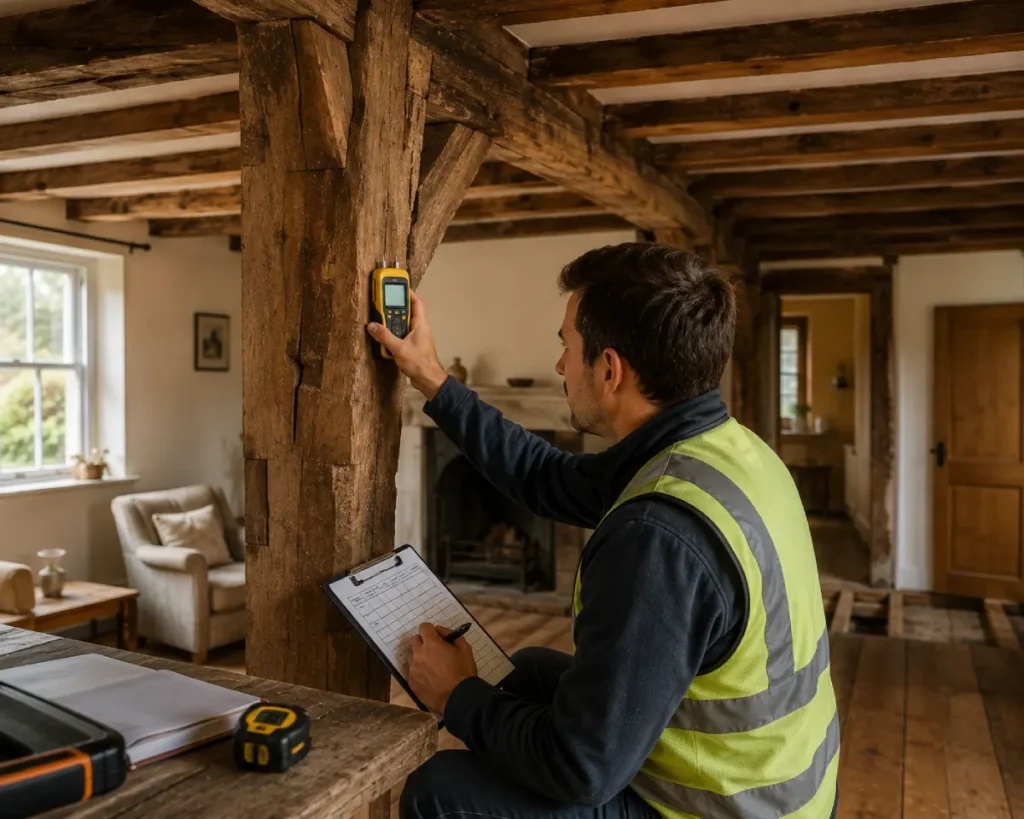
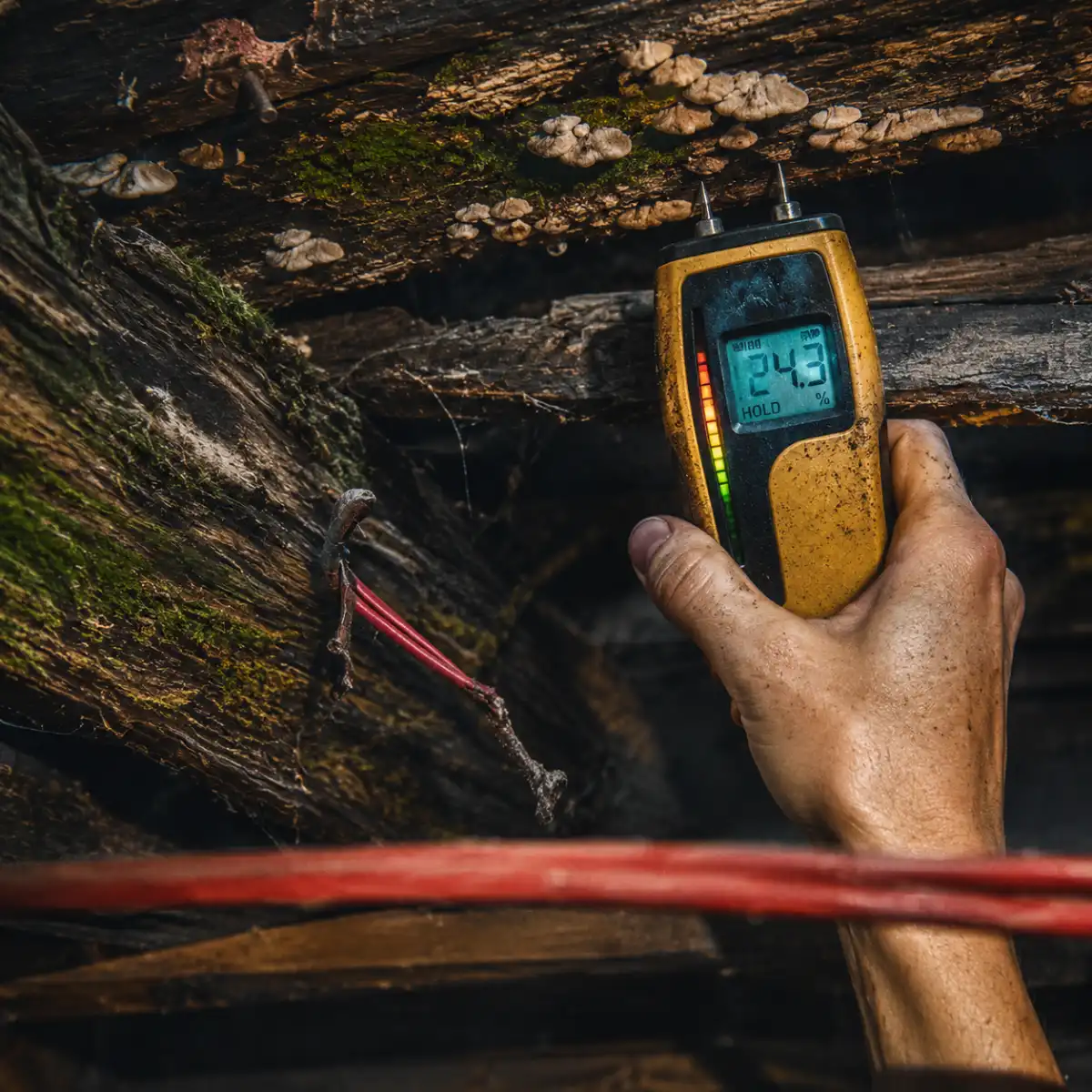
A timber survey is a specialist inspection that diagnoses the presence, extent, and causation of defects affecting wooden elements within a property. Our surveyors assess conditions including woodworm, wet rot, dry rot, moisture-related timber decay, and defects that could affect the strength or stability of timber structures. The inspection may cover floorboards, roof timbers, joists, beams, and wooden frames to establish the nature and significance of any deterioration identified and determine the factors contributing to it.
Many timber surveys are commissioned after concerns arise during a property purchase. Buyers may receive recommendations for further investigation following a Home Survey, while property owners may want a clearer understanding of timber elements affected by decay, insect activity, or long-term deterioration.
An experienced timber surveyor considers more than the defect itself. The inspection places observations within the wider context of the building, providing a professional assessment of the condition of accessible timber and any factors that may have contributed to the defects identified.
We carry out timber surveying for homeowners, purchasers, landlords, and property professionals across South East England and London, including older buildings and properties containing significant timber elements. Our findings are presented within a detailed report providing a professional assessment based on the condition of the accessible timber at the time of inspection.

- Get Your FREE Smart Buyer’s Guide For Homebuyers
Enter your email address below to get FREE instant access to our checklist!
- Your email address will never be shared. By submitting this form you are agreeing to receive messages from Fitzgerald Surveying
- Key Benefits
Types of Timber Defects We Investigate
Timber defects can affect buildings in different ways. Some develop through insect activity, while others result from fungal decay associated with prolonged moisture exposure. Understanding the nature of the defect helps place the condition of the timber in context and supports appropriate recommendations.
Woodworm Survey

Wood-boring insects tunnel through timber during their larval stage, leaving flight holes and bore dust as evidence of activity. A woodworm survey assesses whether activity is current or historic, the extent of the affected timber elements, and whether structural integrity has been compromised.
- Evidence of wood-boring insect activity
- Assessment of affected timber elements
- Condition and structural impact assessment
Wet Rot Survey
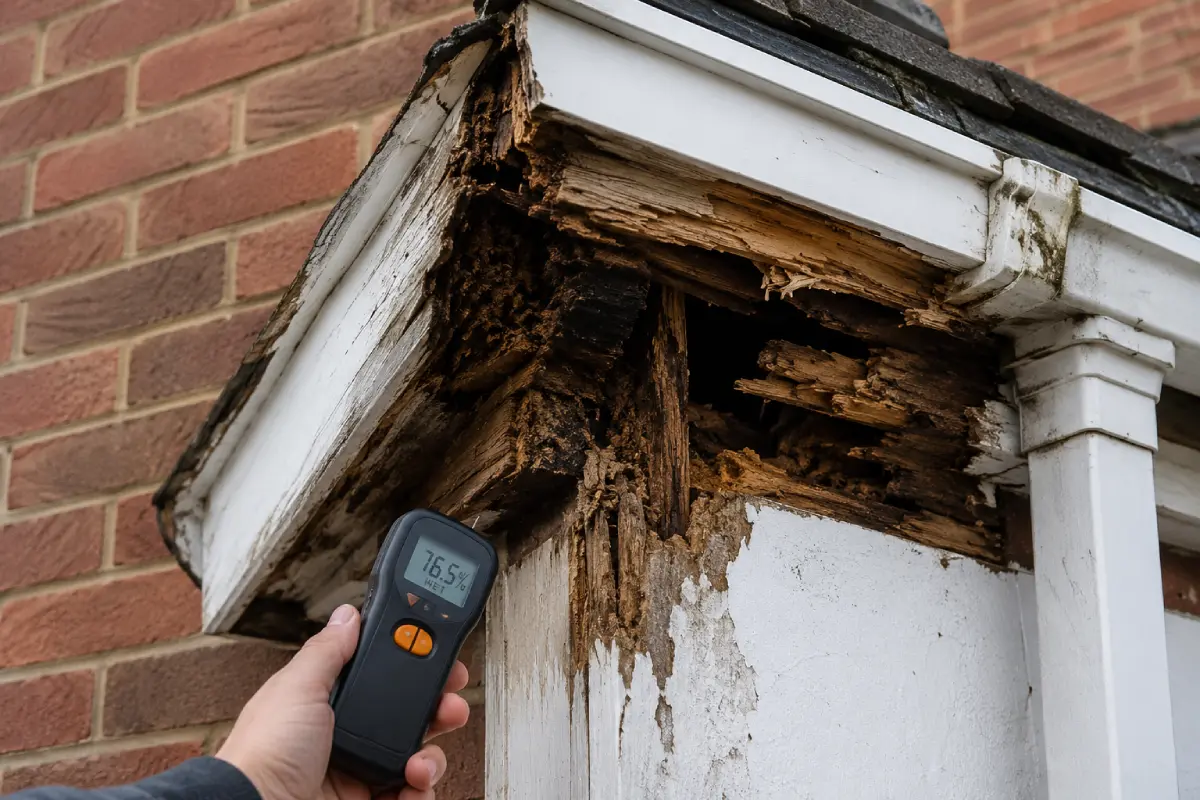
Wet rot is a form of fungal decay that develops where timber is subject to persistent moisture exposure, causing softening, discolouration, and progressive structural weakening. The survey identifies the affected areas, assesses the extent of deterioration, and considers the source of moisture contributing to the condition.
- Moisture-related timber decay assessment
- Inspection of affected timber elements
- Assessment of moisture source and structural impact
Dry Rot Survey
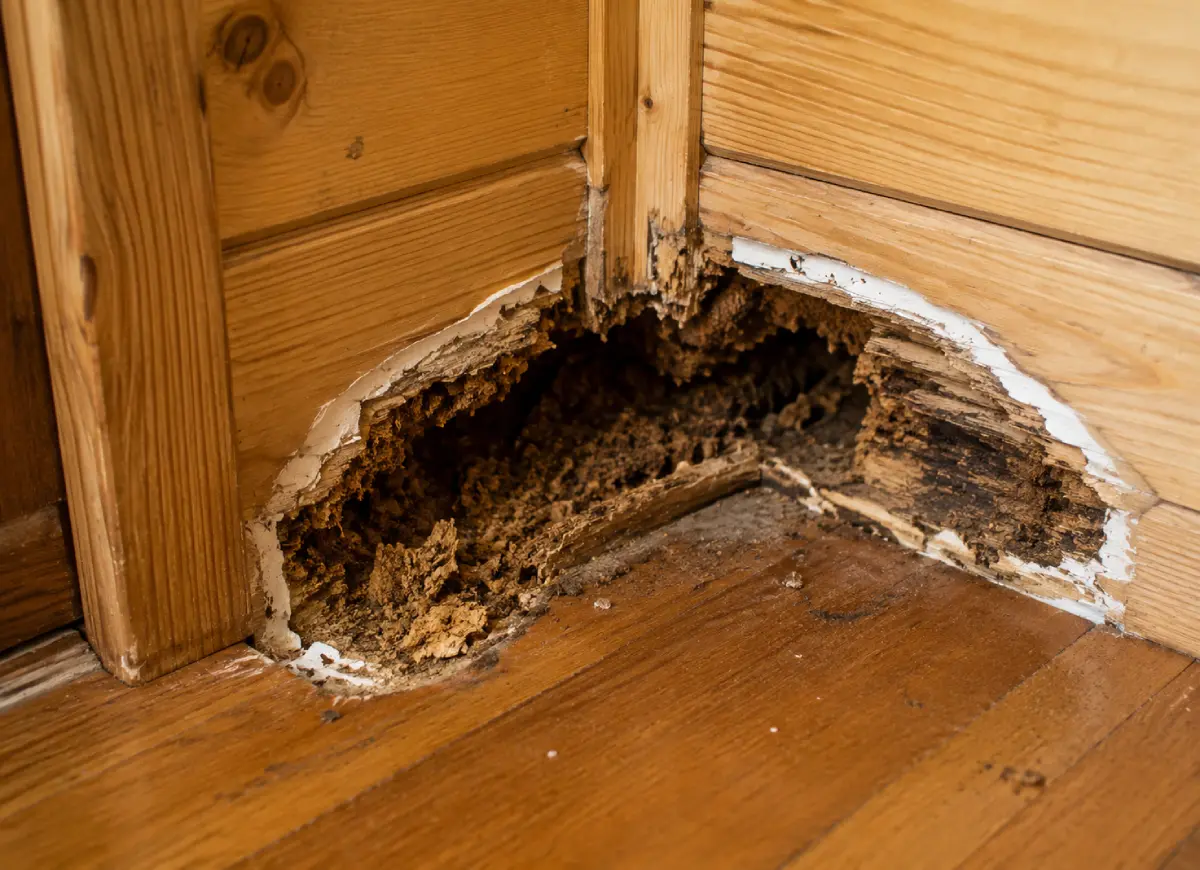
Dry rot is a particularly destructive form of fungal decay capable of spreading through masonry and across non-timber surfaces, affecting areas beyond the initial point of deterioration. The survey records visible evidence of fungal growth, assesses the condition of accessible affected timber, and considers the extent of spread within the building fabric.
- Fungal decay and timber observations
- Assessment of visible affected areas
- Extent of spread and structural implication assessment
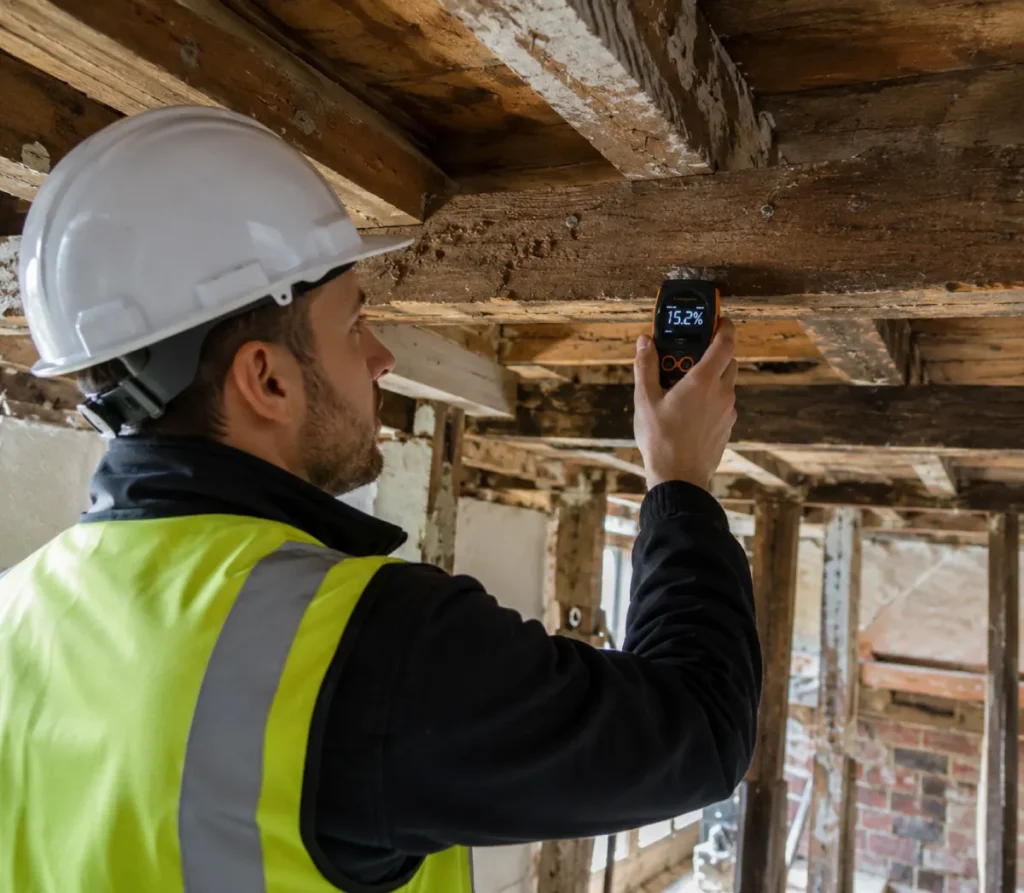
- Report Overview
What's Included in Your Timber Survey Report
A timber survey report brings together site observations, timber condition assessments, and building-related findings to provide a professional opinion on the defects identified, their likely causes, and the appropriate course of action.
- Accessible Timber Condition Assessment
- Evidence of Woodworm Activity (Where Observed)
- Wet Rot and Dry Rot Observations and Decay Assessment
- Timber Decay Assessment Findings
- Moisture-Related Timber Defects
- Roof, Floor and Structural Timber Observations
- Timber Frame Construction Observations (Where Applicable)
- Internal and External Inspection Findings
- Photographic Evidence and Supporting Notes
- Findings, professional opinion, and recommendations arising from the inspection
- Project Insights
Detailed Timber Survey Case Studies
Our timber surveys assess properties for timber defects, decay and damage, giving clients clear findings to understand the condition and plan the right next steps.
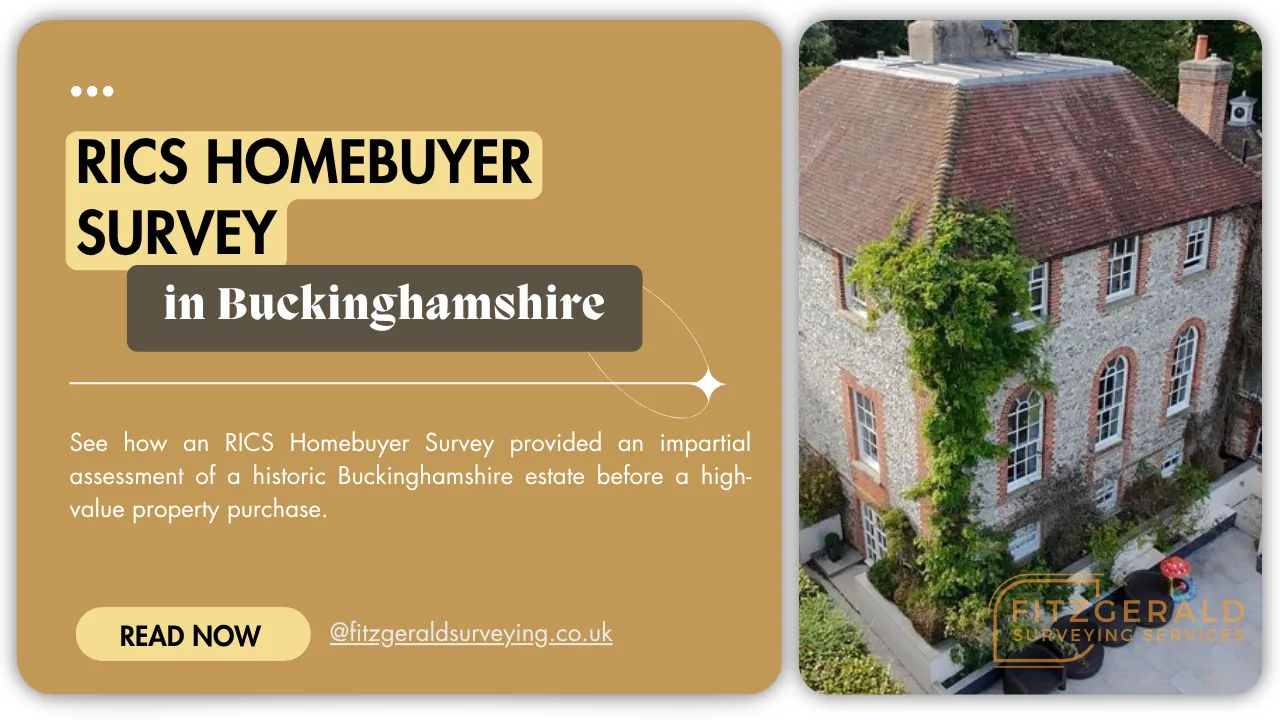
Fitzgerald Surveying Services proudly conducted a detailed RICS Homebuyer Survey on a historic Rothschild hunting lodge in Buckinghamshire valued at over £3 million. Our expert assessment delivered precise, impartial insights, ensuring the client’s confidence in such a prestigious investment.
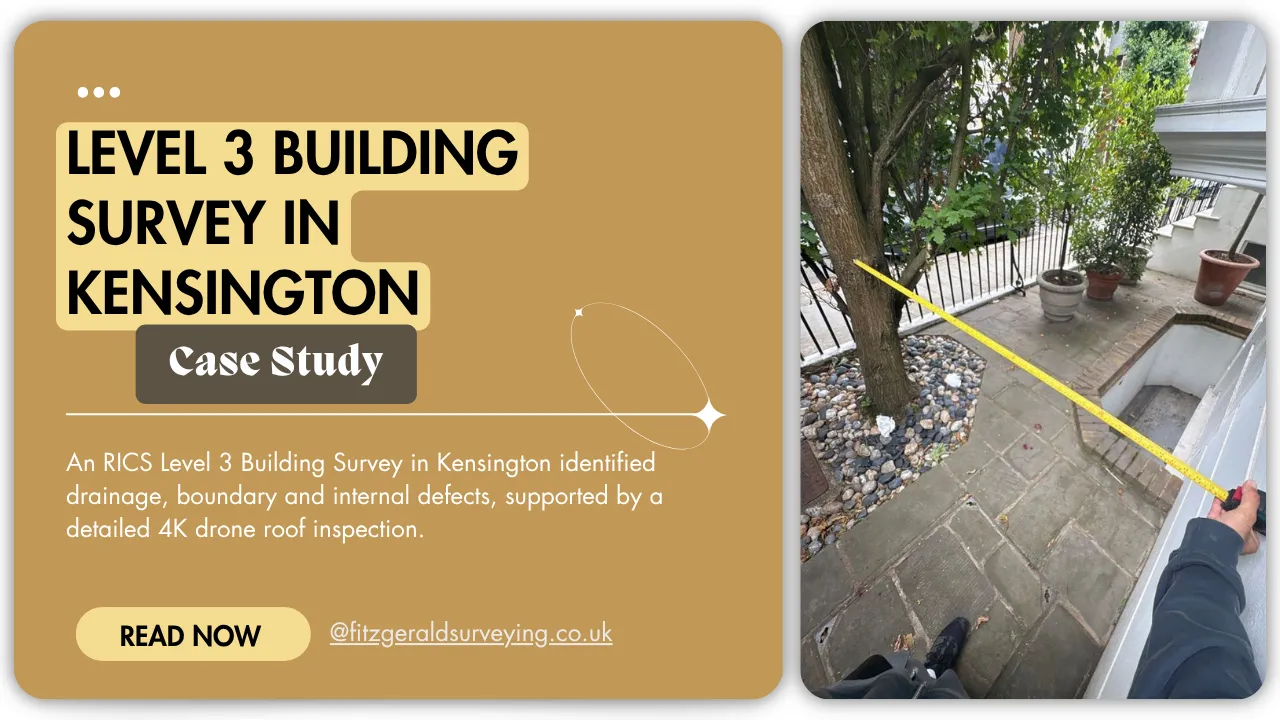
Fitzgerald Surveying Services was instructed by the prospective purchaser to undertake an RICS Level 3 Building Survey of a substantial detached residence in Kensington. Although constructed in 1997, the property had been carefully designed to reflect the Victorian character of the surrounding area and represented a significant purchase requiring a detailed understanding of its condition.
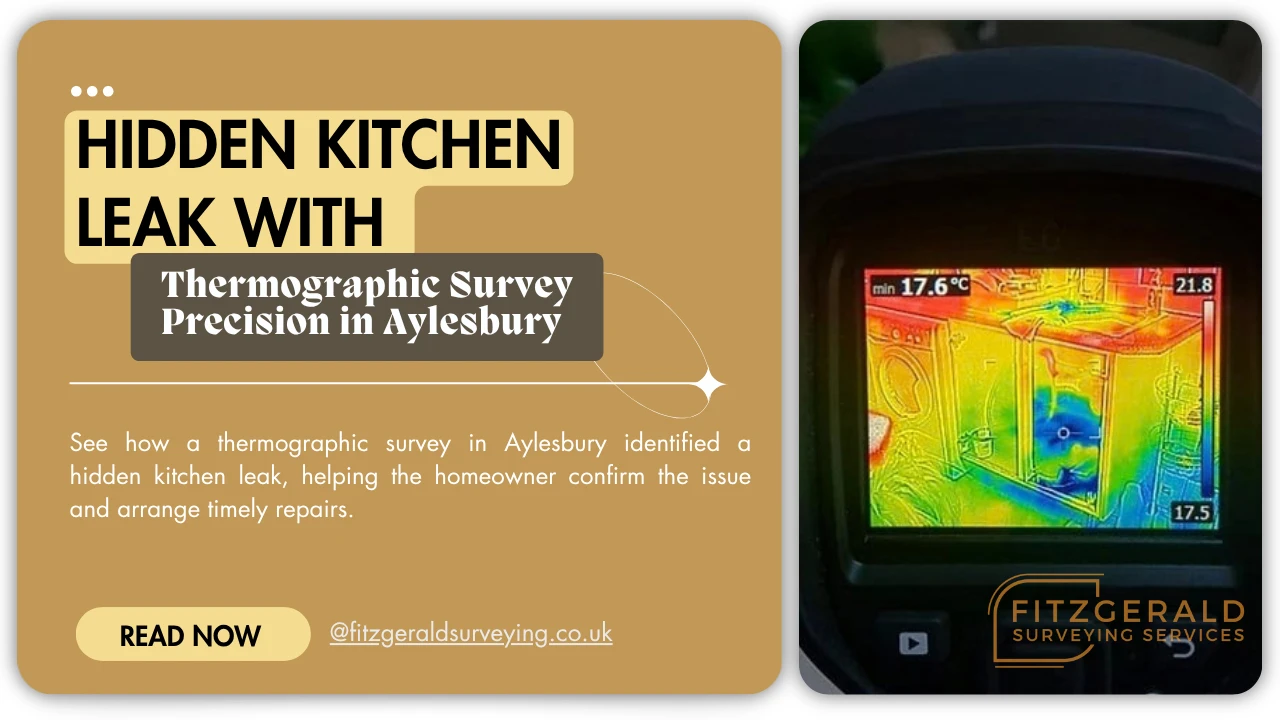
Targeted thermal imaging helped uncover a hidden historic leak beneath a client’s kitchen sink, leading to timely repairs and long-term peace of mind.
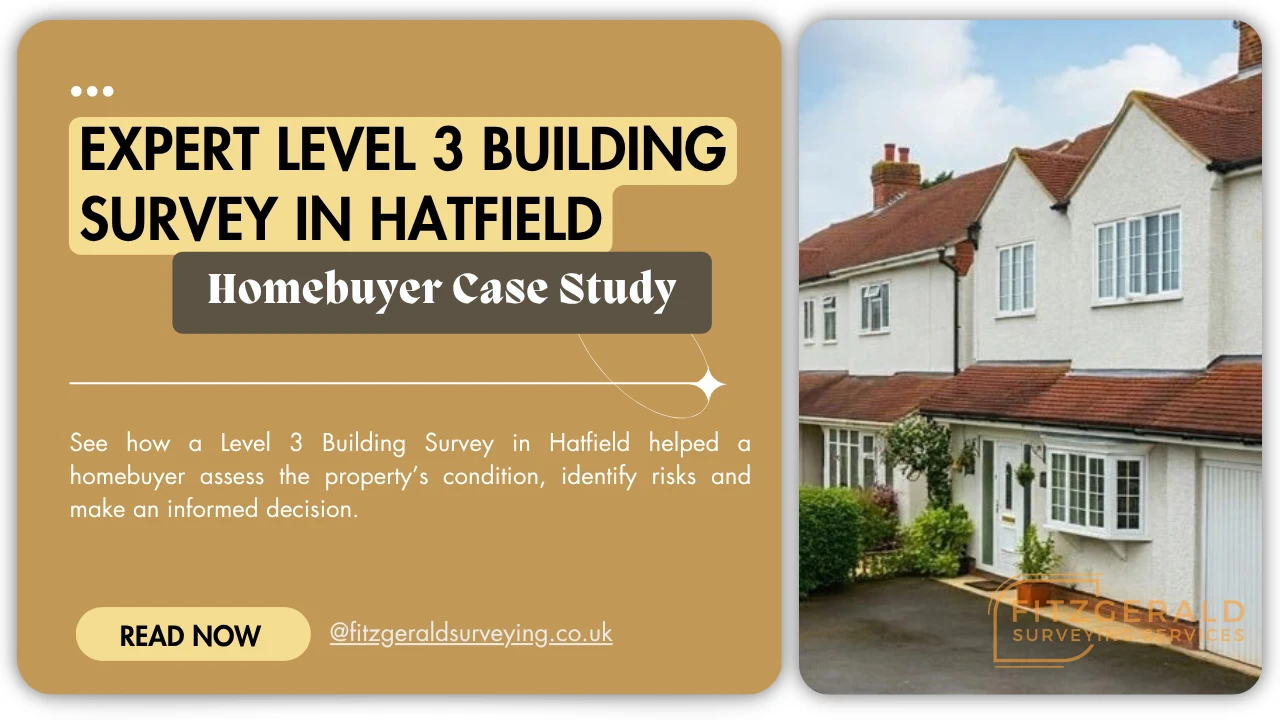
A client looking to purchase a home in Hatfield contacted us for a professional assessment of the property’s condition to guide their buying decision.
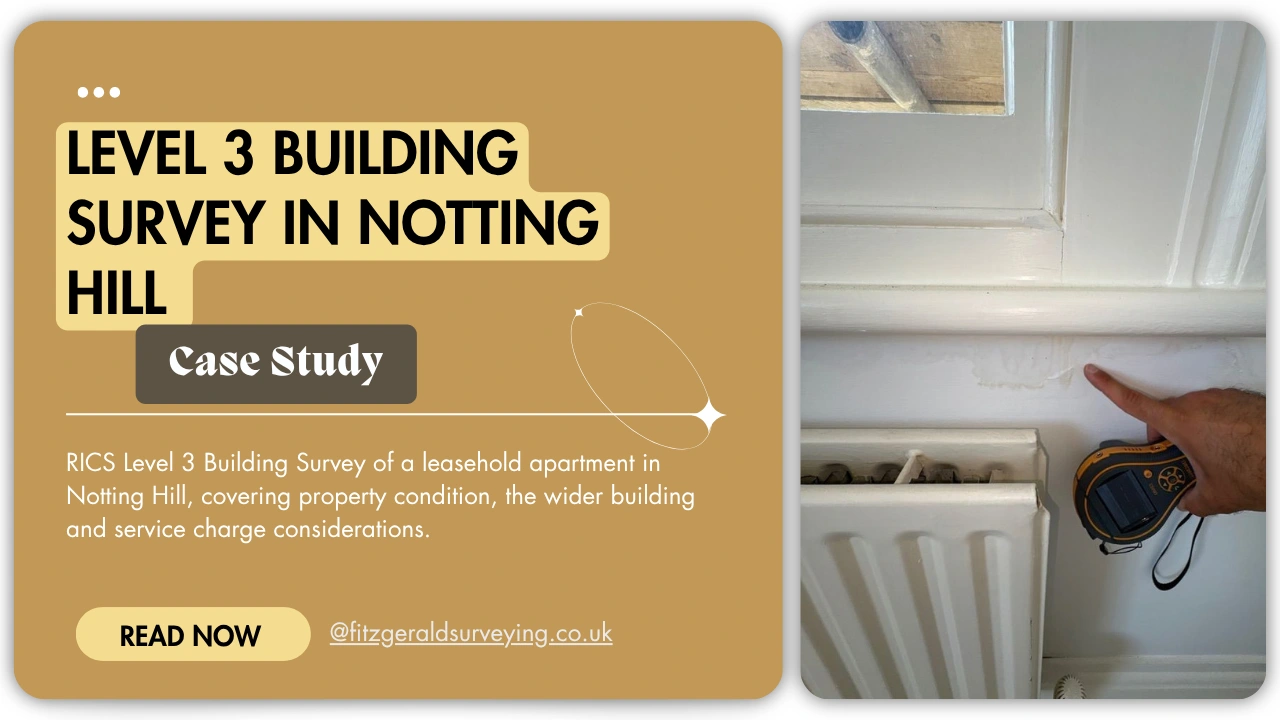
Fitzgerald Surveying Services was instructed to undertake an RICS Level 3 Building Survey of an apartment in Notting Hill, W11. In addition to assessing the apartment itself, the inspection considered the wider building because its condition and future maintenance could have a direct financial impact on the purchaser through the leasehold service charge.
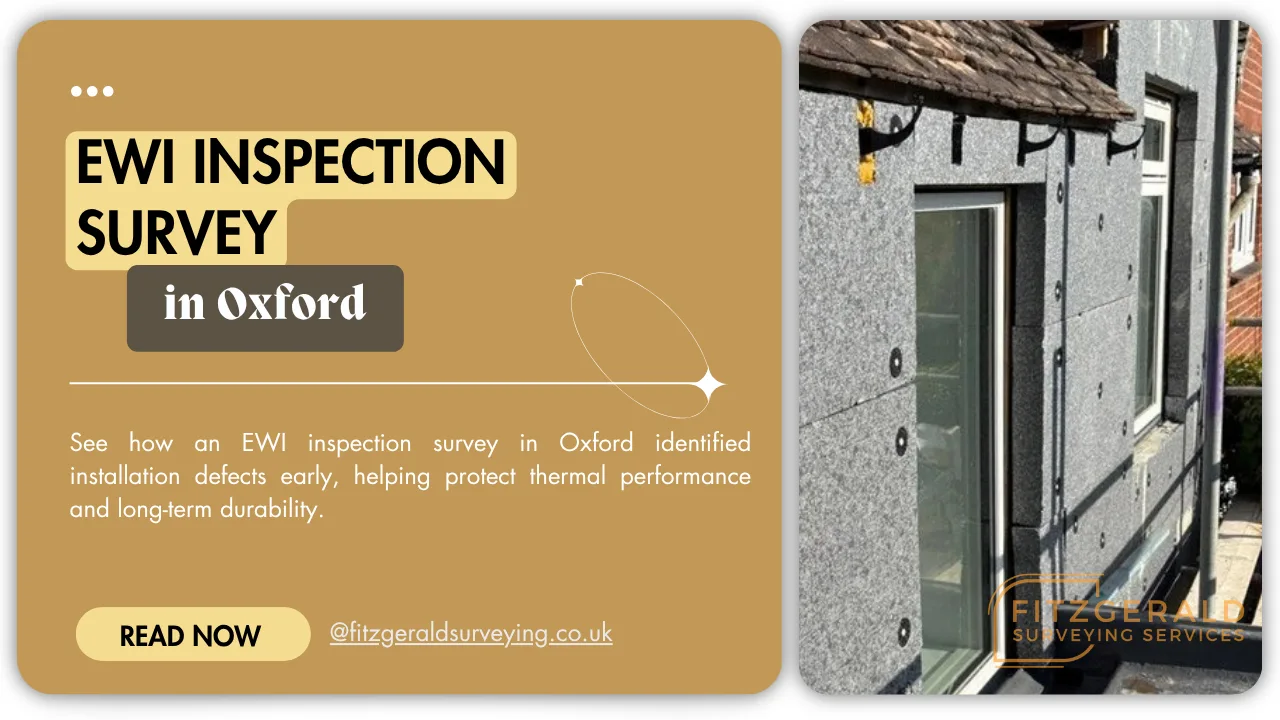
Fitzgerald Surveying Services carried out an independent EWI inspection survey in Oxfordshire to assess workmanship quality and installation standards during a wider home renovation project.
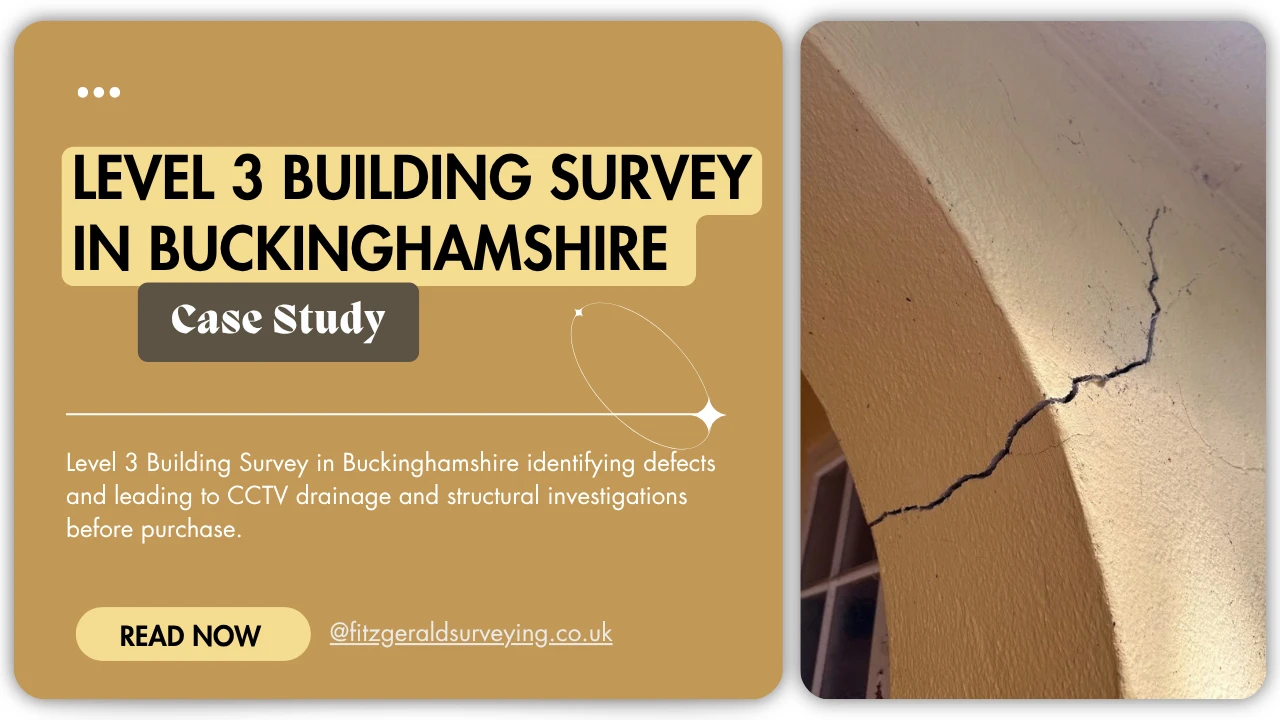
Fitzgerald Surveying Services was instructed to undertake an RICS Level 3 Building Survey of a substantial property in Buckinghamshire. The inspection identified matters that required specialist investigation before the client could properly assess the purchase, leading us to coordinate both a CCTV drainage survey and a structural engineer’s inspection on the client’s behalf. As a RICS building surveyor in Buckinghamshire, we regularly carry out Level 3 building surveys on larger and more complex homes like this one.
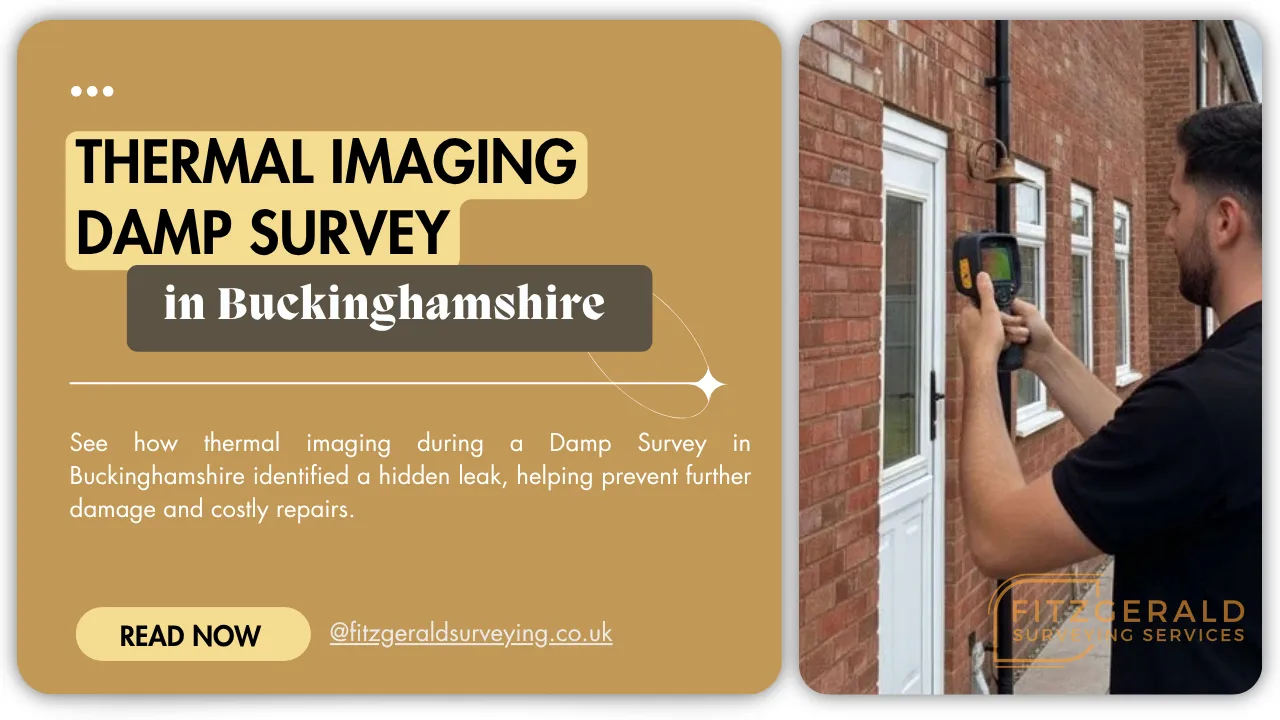
Fitzgerald Surveying Services conducted a thermal imaging damp survey in a modern Buckinghamshire apartment to investigate the cause of an odour. Our non-invasive inspection successfully identified an active hidden leak, preventing further damage and costly repairs.
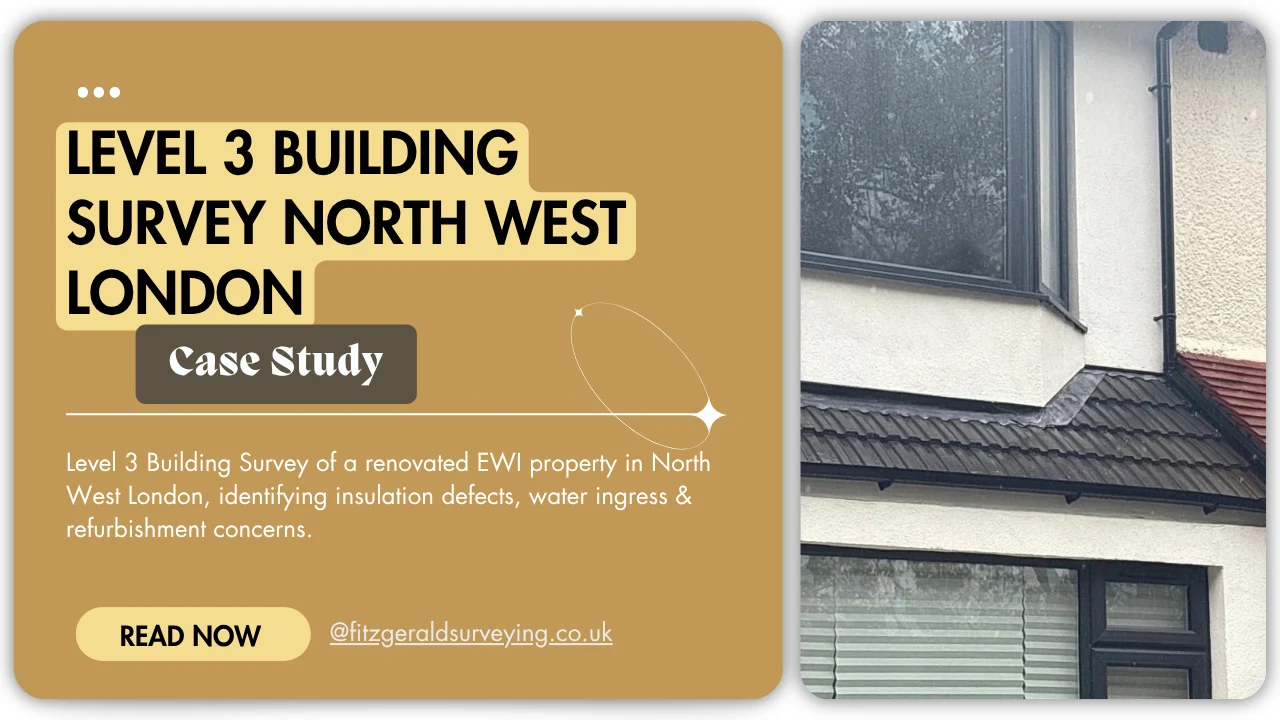
Fitzgerald Surveying Services was instructed by first-time buyers to undertake an RICS Level 3 Building Survey of a recently renovated house in North West London. The property presented extremely well during viewings, but the survey identified a series of defects associated with the refurbishment, including significant concerns with the external wall insulation installation.
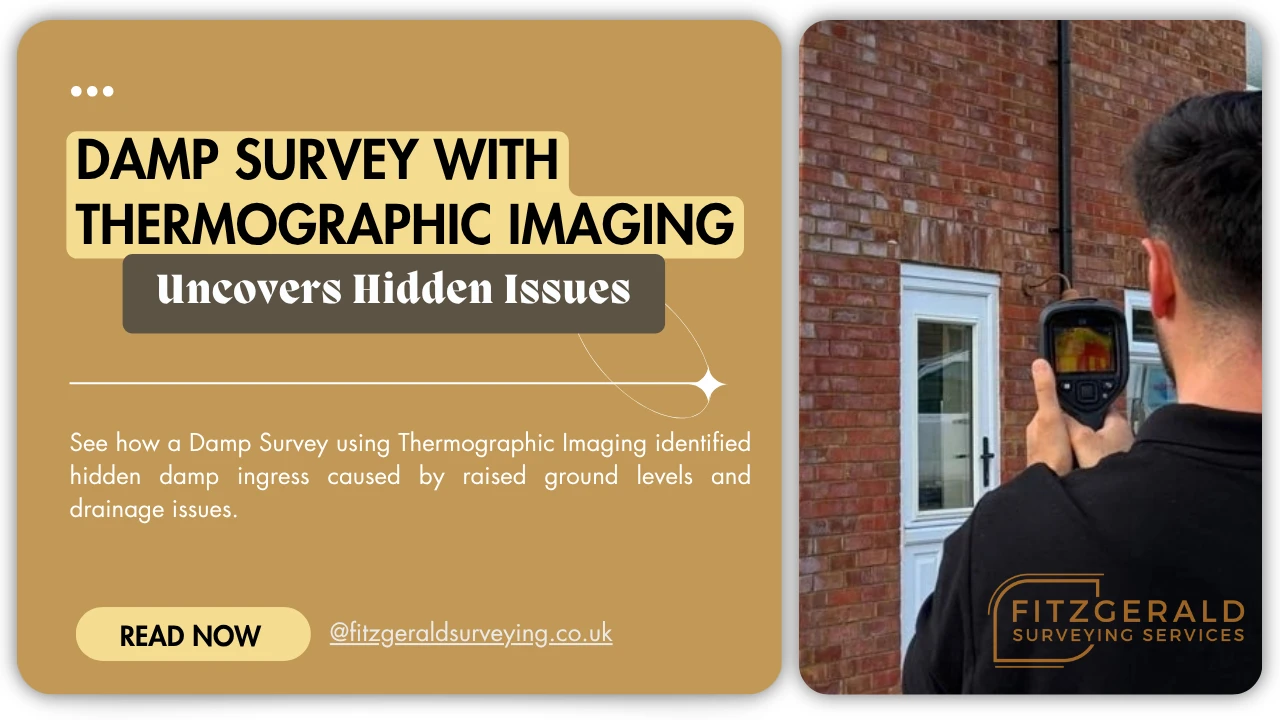
Subtle damp odour and minor discolouration prompted the client to seek expert help. Using advanced thermographic imaging as part of our damp survey process, we were able to detect issues hidden beneath the surface.
- Why Choose Us
Why Choose Our Timber Survey Experts
Fitzgerald Surveying provides independent timber assessments based on the observations made during the inspection, without any commercial interest in the remedial treatments or repair works that may follow. Every report is prepared solely in the client’s interest.

Independent Perspective
Our role is to assess and report on the condition of the property. We do not promote repair products or remedial treatments as part of the survey process.

Pre-Transaction Timber Assessment
Where timber-related concerns are identified during a property transaction, our reports provide the independent professional assessment needed to support informed decisions before exchange of contracts.

Building-Focused Assessments
Timber defects rarely exist in isolation. Our inspections consider the wider building context, including construction type, moisture exposure, and ventilation, to place timber observations within the framework of the property as a whole.

Clear and Structured Reporting
Our reports present the findings in a straightforward format, making them easier to review and reference after the inspection.
Timber Surveys Across South East England and London
Fitzgerald Surveying provides independent commercial surveying services across South East England and London. Our experienced surveyors inspect offices, retail premises, mixed-use buildings and multi-unit commercial properties, providing clear reports and practical advice to help you make informed property decisions.
South East England
We carry out timber surveys across Buckinghamshire, Bedfordshire, Hertfordshire, Surrey, Oxfordshire, Berkshire, and surrounding counties, covering residential and commercial properties from traditional buildings with significant timber elements to more modern forms of construction.
Buckinghamshire
Hertfordshire
London
Our London coverage runs across West, North-West and South-West London, so you can arrange a timber survey in your area of the capital.
West London
Victorian and stucco terraces and mansion flats through Notting Hill, Kensington and Holland Park, with conversions and suburban housing reaching out to Ealing and Uxbridge.
North-West London
Period property in Hampstead and Highgate, Maida Vale's mansion blocks, and the interwar Metroland homes running through Wembley, Harrow, Pinner and Stanmore.
South-West London
Riverside and period homes across Richmond, Kew, Barnes, Putney and Fulham, from Victorian terraces and conversions to newer waterside developments.
- Client Feedback
What Clients Say About Fitzgerald Surveying
Clients instructing timber surveys through Fitzgerald Surveying receive a professionally prepared report with clear findings and recommendations, providing the independent assessment needed to make informed decisions about the property.
 Posted on Google
 Miranda Tuszynski
Trustindex verifies that the original source of the review is Google.
A very detailed survey, including photos Marshall was very helpful explaining any concerns I hadPosted on Google Matthew HThanks for the highly detailed RICS level 2 survey which gives us confidence ahead of our purchase. Very much appreciated.Posted on Google
 Lisa BidaJake prepared a very thorough Level 3 Home Survey report for us. He booked it in quickly with the estate agent and we really appreciated how quickly he was able to get it back to us.Posted on Google
 emma kehoeI recently arranged a level 3 survey on a grade 2 listed property. From start to finish, they were extremely easy to deal with, professional and efficient. Would thoroughly recommend! Thank you.Posted on Google
 Robert PayneThe team carried out a RICS level 3 plus survey on a property we are looking to buy. Great communication from start to finish and very thorough report that ensured we were fully informed on the property. Thanks!Posted on Google
 Bijal PatelJake did a fantastic job with our Level 3 Home Survey. He was professional, knowledgeable, and incredibly helpful throughout the entire process. While we were on holiday, he took the lead in organising both a drain survey and a structural survey, which made everything much less stressful. Jake also took the time to thoroughly review all the documents and promptly responded with clear, detailed feedback whenever needed. His communication and attention to detail were excellent, and it was clear that he genuinely cared about helping us make an informed decision. It was a pleasure working with Jake and the team. I would 100% recommend their services to anyone looking for a reliable and professional surveyor. Thank you, Jake! ⭐⭐⭐⭐⭐Posted on Google
 Geraint Talbot-DaviesPrompt and efficient delivery of a comprehensive building survey. Even better though was their after service care to clarify and amplify key points to follow through on.Posted on Google
 Pierre TheoGreat communication throughout the process. The team provided a well drafted and thorough survey. Highly recommend.Posted on Google
 Edison BakalliExcellent service from Mitchell. The survey was thorough, professional, and delivered promptly. The report was clear and easy to understand, helping me make informed decisions. Highly recommended for anyone looking for a reliable and knowledgeable property surveyor.Posted on Google
 Katie HullWe had an extremely thorough RICS Level 3 plus survey done on an old property we are buying. We were very impressed by the detail of survey and communication. Would thoroughly recommend!
- Survey Process
From Booking to Timber Report in 4 Clear Steps
Whether concerns relate to timber deterioration, woodworm activity or issues raised during a property purchase, our process provides a structured route from the initial enquiry through to the completed report.
STEP 1
Step 1: Discuss Your Requirements
We begin by discussing the property and the reasons for the instruction. This helps establish the scope of the survey before the inspection takes place.
STEP 2
Arrange a Suitable Inspection Date
Once instructed, we arrange a convenient time to visit the property and carry out the inspection.
STEP 3
Timber Inspection
The surveyor examines accessible timber elements and records the observations made during the inspection.
STEP 4
Receive Your Timber Report
Following the inspection, you receive a detailed timber report outlining the findings and any recommendations arising from the survey.
- FAQ
Timber Survey Questions, Answered
Property owners and purchasers may have questions about the inspection process, common defects and what happens after the visit. The answers below cover some of the points clients regularly raise before arranging an assessment.
A timber report sets out the observations made during the inspection, identifies any timber-related concerns, explains their likely cause and significance, and provides recommendations arising from the survey.
A timber survey is a focused assessment of accessible timber elements within a building. The surveyor records any visible deterioration, fungal decay, insect activity, or related defects and provides a professional opinion on their significance and likely cause within a written report.
Many people arrange a survey after noticing signs of timber deterioration, when concerns are raised during a property purchase, or when another survey recommends a closer look at the timber.
The surveyor assesses accessible timber for evidence of wood-boring insect activity, including flight holes, bore dust, and visible damage to timber surfaces. These observations support a professional assessment of whether activity is current or historic and the extent of any deterioration present.
Most timber inspections take between 1 and 3 hours depending on the size and accessibility of the property. Larger properties generally take longer than smaller ones.
Wet rot and dry rot are distinct forms of fungal decay requiring different assessment approaches. Wet rot is associated with persistent moisture exposure and typically remains localised to the affected area. Dry rot is capable of spreading beyond the initial point of deterioration through masonry and building fabric. The survey identifies visible signs of both conditions and assesses the extent of affected timber.
Where timber-related concerns have been identified during a property purchase, whether through a Home Survey recommendation or observations during a viewing, an independent timber survey provides the detailed assessment needed before proceeding to exchange.
You receive a detailed report explaining the findings, together with any recommendations arising from the survey.
- Specialist Inspections
Other Surveys and Specialist Inspections We Provide
Timber problems rarely appear in isolation. Where our inspection points to damp, mould, hidden moisture or wider building concerns, we also provide these specialist inspections across South East England and London.
Identifies rising, penetrating and condensation damp and follows moisture back to its source.
Finds why mould keeps returning and the airflow conditions letting it take hold.
For assessing visible timber defects, including rot, decay and insect-related damage in accessible floors, roofs and structural timbers.
Provides detailed aerial views of roofs, chimneys and gutters without access towers or scaffolding.
Uses thermal imaging to expose heat loss, cold bridging and moisture hidden behind surfaces.
Independent quality and compliance checks on external wall insulation, during or after fitting.
- Get In Touch
Arrange Your Independent Timber Survey Today
Where timber condition, woodworm activity, or fungal decay requires professional assessment, an independent timber survey provides an accurate basis for understanding the extent of the issue before committing to a property or undertaking remedial works. Fitzgerald Surveying carries out timber surveys across South East England and London. Whether you require a domestic timber survey, a timber condition survey, or further investigation following another inspection, contact Fitzgerald Surveying directly. All initial enquiries are without obligation.
63 New Road, Weston Turville, Aylesbury HP22 5QY
167-169 Great Portland St, London W1W 5PF, United Kingdom
enquiries@fitzgeraldsurveying.co.uk
0333 2249 516