Damp appearing along the base of a wall is a common concern for homeowners, and in the older housing stock of the South East it arises frequently. The skirting smells musty, and the plaster feels soft to the touch. Before drawing conclusions about the property, it is worth establishing what the problem actually is. Understanding ‘what is rising damp’ is what separates it from the other forms of damp with which it is regularly confused. The sections below explain how to recognise it and what to do next.
What Is Rising Damp?
Rising damp is groundwater drawn upwards into the base of a wall. It moves through brick, stone and mortar by capillary action, in much the same way that water is drawn up through a wick. It affects ground-floor walls that sit in contact with the ground, and the height it reaches varies from one property to another, depending on the construction of the wall, its condition, the salt content of the masonry and how wet the ground beneath it remains. Upper-floor walls are unaffected, as the moisture has no route up from the ground. Older properties are the most commonly affected, particularly the Victorian terraces and solid-walled period homes found throughout the South East.
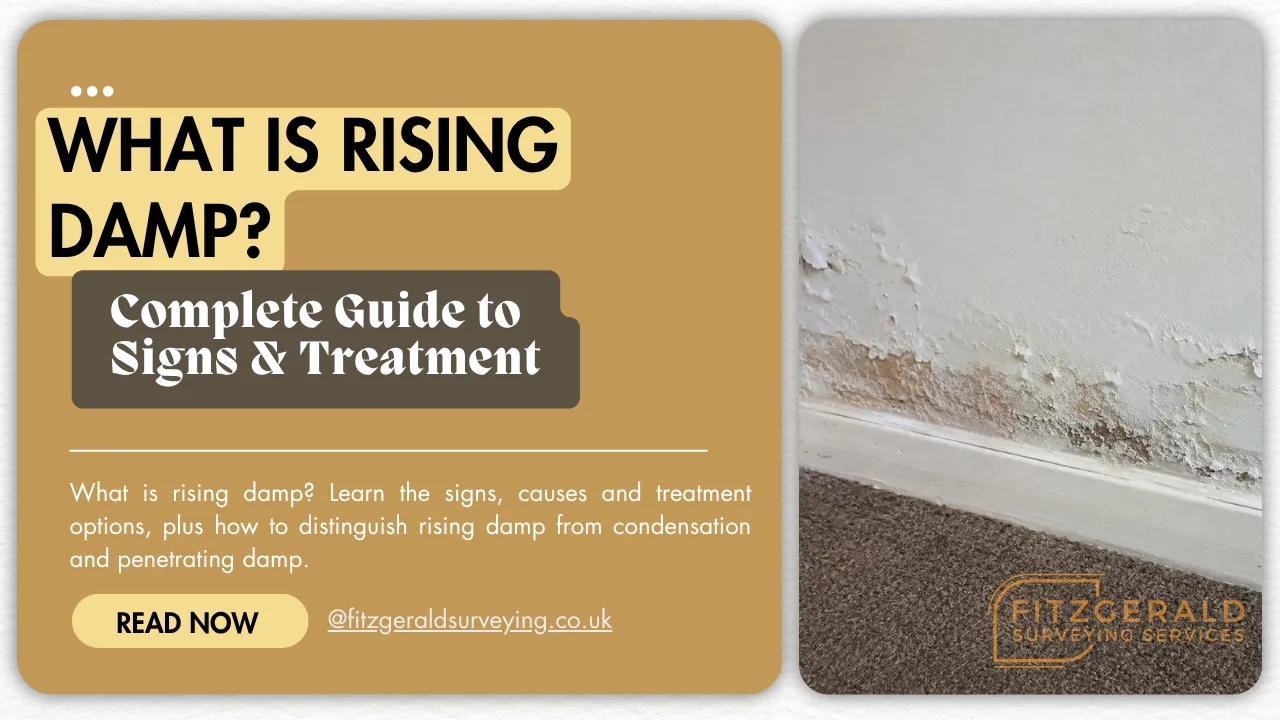
The Signs of Rising Damp in a House
Damp at low level does not always originate from the same source, so the indicators warrant careful assessment. The clearest signs of rising damp in a house are concentrated at the base of the wall in a recognisable pattern.
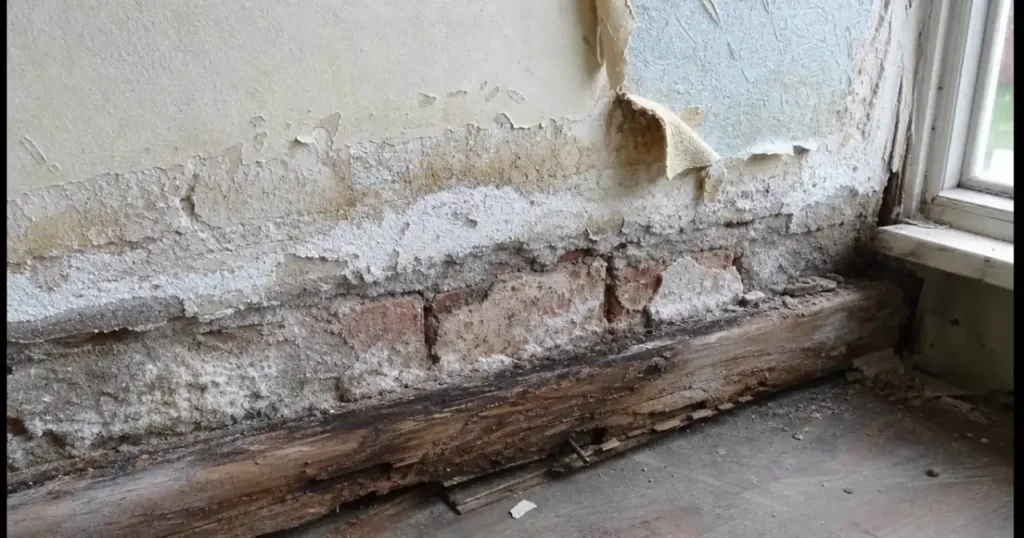
- A brown, horizontal tide mark low on the wall, marking the level the moisture reached before evaporating
- Chalky white salt deposits, known as efflorescence, left on the plaster or brickwork as the water evaporates
- Plaster that bubbles, flakes or crumbles when disturbed near the skirting
- Wallpaper lifting at the edges, or paint blistering along the foot of the wall
- Skirting boards and adjacent timber that feel soft or spongy, with early signs of decay
- A persistent, earthy smell in rooms that are heated and in regular use
Because the moisture is drawn up from the ground, the signs of rising damp in walls remain at low level. Damp appearing higher up a wall, or in an upstairs room, generally indicates a different source.
Rising Damp in Buildings vs Condensation and Penetrating Damp
Rising damp in buildings is one of three problems that present at low level on a wall, and the other two can appear almost identical. Distinguishing it from condensation and penetrating damp is where misdiagnosis most commonly occurs.
Rising damp originates in the ground and is drawn up through the base of the wall, so it affects ground-floor walls only. Its characteristic indicators are tide marking, salt deposits and crumbling plaster at low level, and it remains present consistently throughout the year rather than varying with the weather.
Penetrating damp enters through a defect in the building fabric and travels inwards, so it can appear at any height, close to the fault responsible, whether that is a roof, a gutter or cracked render. It typically shows as isolated patches, with staining that worsens after rainfall.
Condensation forms where warm, moist internal air meets cold surfaces. It is found on windows, in room corners and on cold walls, and is associated with streaming glass, black spot mould and rooms that feel stuffy or poorly ventilated.
Because the symptoms overlap, the appearance of the wall alone will not identify which of the three is present. A surface moisture meter offers limited assistance, as it responds to the salts left behind by evaporation and can register an otherwise sound wall as wet. RICS consumer guidance on damp and mould makes the same point about meter readings. A reliable assessment considers the building as a whole rather than a single figure, which is precisely what an independent damp survey provides.
Where Rising Damp Comes From
Rising damp occurs where the damp-proof course (DPC) is absent or has been bypassed. A damp-proof course is the waterproof layer built into the base of a wall to prevent ground moisture from entering. Homes built before 1875 predate the legislation that made these barriers standard, so a great many period properties were constructed without one. In more modern buildings, the barrier can be bridged where soil, a raised bed, a patio or a newly laid driveway sits above the DPC line and provides moisture with a route around it. The fuller picture, including how rising damp affects internal walls and the part played by a high water table, is set out in our guide to what causes rising damp.
How Do You Treat Rising Damp?
Any considered approach to treating rising damp begins by confirming that rising damp is genuinely the cause, then addressing the source rather than the staining it produces. Where ground levels have bridged the barrier, lowering the soil or paving below the DPC line can be sufficient in itself. Where no damp-proof course was ever installed, a retrofitted barrier may be appropriate.
Only once the moisture has been cut off should damaged plaster and decoration be reinstated, and breathable materials assist the wall in releasing its remaining moisture. Fresh gypsum plaster applied to a wall that is still wet will seal the moisture in and deteriorate within months. A wall that has been wet for a prolonged period also requires time to dry out; in some cases, the better part of a year, before it can be assessed as sound.
No single remedy suits every property, which is why the cause must be established before any work is undertaken. Specifying chemical injection before the diagnosis is settled frequently results in the same wall requiring treatment a second time.
Getting a Clear Answer for Your Property
Understanding what rising damp is one thing; confirming it in a particular wall is what prevents expenditure on unnecessary work. Because the signs overlap with condensation and penetrating damp, low-level damp warrants proper assessment before money is committed to treatment.
An independent surveyor should be instructed early, before any remedial work is priced. Our damp surveys are carried out by qualified surveyors who are members of RICS, RPSA, CIOB and FODCS (Federation of Damp Certified Surveyors), and we examine the wall, the ground conditions and the wider building before setting out what is behind the problem. Book an independent damp survey for an answer you can act on.
Rising Damp FAQs
How high does rising damp usually rise?
There is no fixed height. The level reached depends on the porosity and condition of the masonry, the salt content of the wall and how wet the ground beneath it remains, so it varies considerably between properties. The height should therefore be read alongside the other indicators, the tide marking, the salt deposits and the condition of the plaster and skirting, rather than treated as a measurement that confirms or rules out rising damp on its own.
Can a modern house get rising damp?
It can, although it is far less common. Properties built within the last century were constructed with a damp-proof course as standard, so the barrier is already present within the wall. Difficulties arise where something bridges it: a patio laid too high, a border banked up against the brickwork, or a driveway that has been built up above the DPC line over the years.
How is rising damp diagnosed?
Not on the basis of a single meter reading. The signs overlap with condensation and penetrating damp, so the cause becomes clear only once the building as a whole is taken into account. A surveyor assesses the pattern of the moisture, the height it has reached, the external ground levels and the way the property was constructed, then forms a view from the complete picture rather than from one figure.