
Few people plan for a formal property valuation in their moving budget. Then a letter arrives asking for one. It might come from a lender, a housing provider, or a solicitor dealing with an estate. The first question is always the same: how much is a RICS valuation, and why do two quotes for similar homes sometimes sit a few hundred pounds apart?
There is no national price list. The RICS valuation cost depends mostly on why you need the report. The property plays a part too, as does the valuer’s availability. Below are the ranges that have been published, who published them, and the things that push a quote higher or lower.
How Much Does a RICS Valuation Cost?
Most published figures for an ordinary house or flat sit between £350 and £600. For that, you get a visit, research into recent comparable sales nearby, and a written report. The report follows the RICS Red Book standards.
Not every valuation lands in that bracket. Some cost the homeowner nothing at all. Others go well past £600.
The biggest single factor is purpose. Lenders price their mortgage valuations one way. A report written for HMRC or a housing association is priced quite another way.
What Is the Average RICS Valuation Cost?
Public bodies, lenders and comparison sites give figures that line up fairly closely.
MoneyHelper, the government-backed guidance service, says lenders usually cover the mortgage valuation. If the buyer does have to pay, it says to allow somewhere from around £350 to £800, depending on the value of the home.
Shared owners get a narrower figure. Dover District Council says a staircasing valuation by a RICS-qualified surveyor costs within £450. Comparison platforms report similar figures. On Compare My Move, a standalone RICS valuation report averages about £367. Konnect You’s figure is a little lower, at roughly £354.
So for a typical home, budgeting £350 to £600 is sensible. Expect to pay more for a larger, unusual or higher-value property.
RICS Valuation Costs by Purpose
Here are the same figures, sorted by what the valuation is for. The source sits next to each one. Follow the links to check each figure before setting a budget.
| Purpose | Typical cost | Who usually pays | Source |
|---|---|---|---|
| Mortgage valuation | Usually free; otherwise £150 to £800 | Lender or buyer | MoneyHelper |
| Equity loan repayment | Valuation fee plus a £200 administration fee | Homeowner | GOV.UK |
| Shared ownership staircasing | £250 to £450 | Shared owner | Dover District Council |
| Probate | From £250 plus VAT | Executors | First4Lawyers |
| Standalone valuation report | £160 to £600 | Whoever instructs it | Compare My Move |
These figures are indicative ranges taken from third-party sources at the time of writing (September 2026). They are not quotes. Fees vary with the property, its location and the purpose of the report, so always confirm the price with your chosen valuer before instructing them.
What Factors Affect the Cost of a RICS Valuation?
Valuers do not work from a fixed tariff. Each quote is built around the property and the job in hand, which is why two homes on the same street can attract noticeably different fees.
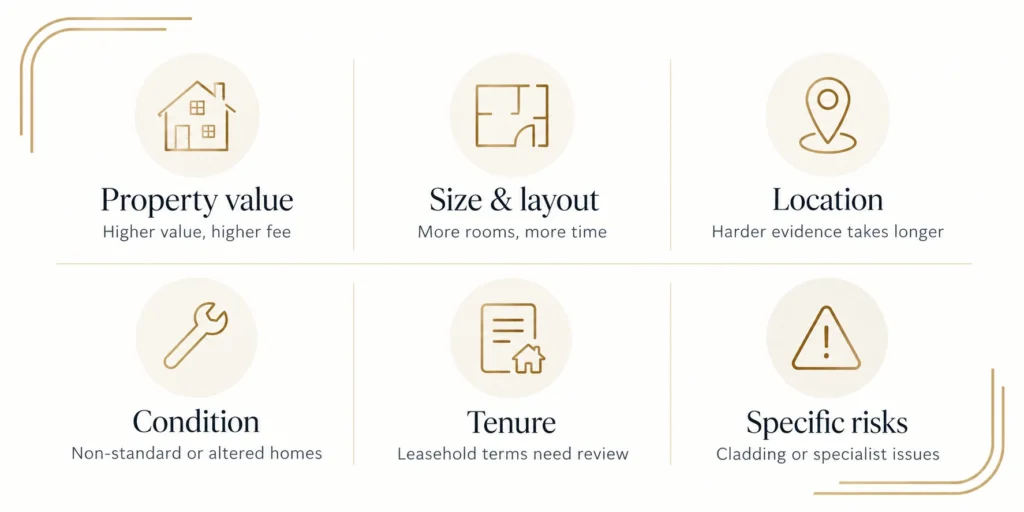
The fee reflects the time a valuer spends on site and at the desk. Anything that adds hours adds cost.
- Property value. Higher-value homes carry more risk for the valuer, and fees usually rise with value.
- Size and layout. More rooms mean more measuring and a longer inspection.
- Location. In areas with few recent comparable sales, the valuer needs more time to gather evidence.
- Construction and condition. Non-standard build types, heavy alterations or poor condition all take longer to assess.
- Tenure. Leasehold and shared ownership homes bring lease terms that the valuer has to review.
- Specific risks. Features such as external cladding can call for a specialist valuation, which adds to the fee.
Why Do RICS Valuation Fees Vary?
Two valuers can look at the same house and quote different fees. Part of that reflects each firm’s own running costs. Part of it comes down to how strict the report has to be.
Some reports must meet requirements set by the body receiving them. The valuer may need to inspect the inside of the home, stay independent of any estate agent, and support the figure with several recent sales nearby. That is a lot of work for one report, and the fee reflects it.
A mortgage valuation, by contrast, is commissioned by the lender for the lender. It is usually quicker and simpler to produce.
Turnaround and follow-up work also count. If a report expires before completion, an extension or a fresh valuation costs extra.
Is a RICS Valuation Worth the Cost?
In several situations, it is not optional. Equity loan repayments and shared ownership staircasing both need a formal RICS valuation, and the homeowner pays for it.
Housing providers do not usually accept an estate agent’s valuation or a lender’s mortgage valuation for this, because neither counts as independent.
Probate is less rigid, but the stakes are high. Executors must value property as it stood on the date of death. Where an estate sits near the £325,000 Inheritance Tax threshold, a formal report gives executors documented evidence behind the figure they submit.
Seen against those outcomes, a fee of a few hundred pounds is modest.
Who Pays for a RICS Valuation?
The answer is not the same for every valuation. Scheme rules, lender policy and the reason for the report all determine who pays, and the property owner is not always the one paying. In short, it depends on who needs the figure.
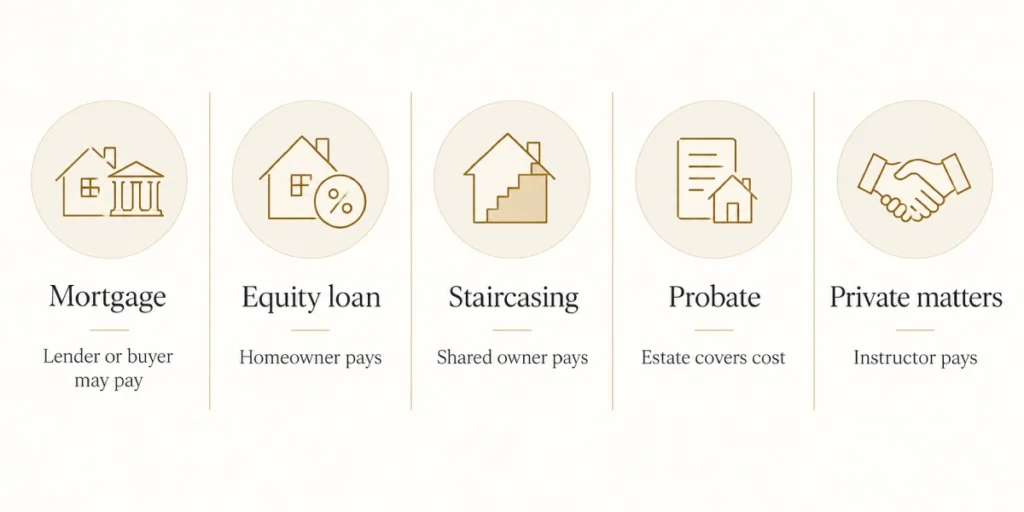
- Mortgage lending. The lender usually pays, and some lenders include a free standard valuation with their mortgages. Others pass the fee to the buyer.
- Equity loan repayment. The homeowner pays for the valuation, along with any administration fee the scheme charges.
- Staircasing. The shared owner pays, and the report usually has to be addressed to the housing provider.
- Probate. The executors arrange the valuation and deal with the fee as part of estate costs.
- Private matters. For a family transfer or a dispute, whoever instructs the valuer normally pays.
How to Get an Accurate RICS Valuation Quote
A vague enquiry gets a vague quote. A few details at the start save time for everyone.
Tell the valuer why you need the report and who it will be addressed to. Give the property type, the number of bedrooms, the tenure and any extensions. Mention your deadline too.
Timing needs thought. Valuations for schemes and staircasing are normally valid for three months, so booking too early can mean paying twice.
Ask whether the quote includes VAT and what an extension would cost if completion is delayed. Finally, confirm the valuer meets any criteria set by the organisation receiving the report.
Final Thoughts
The RICS valuation cost for most homes sits between £350 and £600. Where your fee lands depends on the purpose of the report, the property and how strict the receiving body’s rules are; check those rules first, then compare like-for-like quotes.
Fitzgerald Surveying Services is a RICS-registered firm providing property valuations across Buckinghamshire and the Home Counties. If you need a valuation figure you can rely on, our team is happy to talk through what your situation requires.
FAQs
What happens if a RICS valuation expires before completion?
Most scheme valuations are valid for three months. If that period runs out, the valuer can sometimes extend the report with a desktop update. Otherwise, a new valuation is needed, and the extra cost usually falls to the homeowner.
Can an estate agent valuation be used for shared ownership staircasing?
Generally not. Most housing providers ask for an independent open market valuation by a RICS surveyor. An estate agent’s figure or a lender’s valuation is not normally accepted, so check your provider’s rules before booking.
Is a mortgage valuation the same as a RICS valuation?
No. A mortgage valuation is carried out for the lender to confirm the property is worth what they are lending. It is not a survey and will not flag repairs. You usually cannot rely on it for any other purpose.