
Help to Buy scheme closed to new applications in October 2022. But the loans remain for thousands of homeowners. Selling, remortgaging or paying off the loan all lead back to one step. Homes England will need a Help to Buy RICS valuation before anything can move forward.
The figure it produces matters. The loan is repaid as a share of your home’s current value, not the amount you originally borrowed. Homes England also sets clear rules for the RICS valuation Help to Buy homeowners need, covering who can carry it out and what the report must contain.
A report that falls short can be returned, and that costs time. This guide explains what the valuation involves, who can do it, what it costs and how to arrange it without delays.
What Is a RICS Valuation for Help to Buy?
A Help to Buy property valuation is a formal market valuation of your home. It is carried out by a RICS-registered valuer and addressed to Homes England, the government body that manages the scheme. The figure in the report is used to work out how much you owe.
Your equity loan is measured as a share of your home’s value. If you borrowed 20% of the purchase price, you repay 20% of what the home is worth at the time of repayment, as the GOV.UK Help to Buy guidance explains. A rise in value means a larger repayment. A fall means a smaller one.
Why Do You Need a RICS Valuation for Help to Buy?
Homes England will not process a repayment without one. A RICS valuation for Help to Buy equity loan redemptions gives the administrator an independent, evidence-based figure to calculate from.
The figure in the report directly shapes the sum you pay back. You will need one in the following situations.
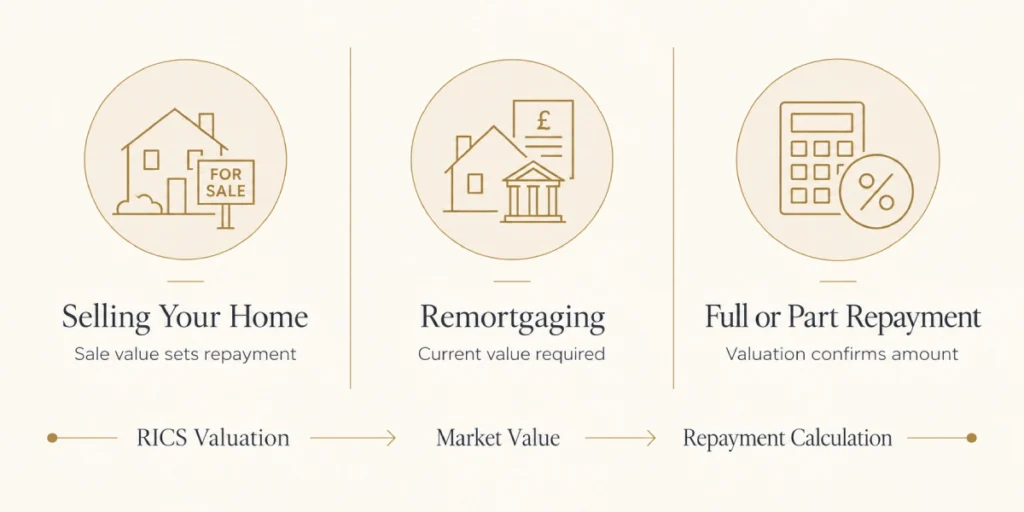
Selling Your Home
When you sell, the loan is repaid from the sale proceeds. The amount is based on the market value in the report or the agreed sale price, whichever is higher, as set out in the GOV.UK guidance on selling.
Remortgaging
If you remortgage to repay the loan, Homes England needs a current value. If you plan to borrow more, it also uses the figure to check that your loan-to-value ratio stays within its limits.
Repaying in Full or in Part
You can redeem the whole loan from savings at any time. Part redemptions are also permitted, with a minimum of 10% of your home’s market value each time. Every repayment, full or partial, needs a valuation.
Who Can Carry Out a Help to Buy RICS Valuation?
Homes England sets firm criteria for the valuer as well as for the report. These rules protect the independence of the valuation figure, so it is worth checking them carefully before you instruct anyone.
Not every valuer qualifies, and choosing the wrong one can prove costly. The Help to Buy RICS valuation requirements published by Homes England state that the valuer must:
- be RICS-qualified and registered
- be independent of any estate agent
- not be related to you or known to you
- hold MRICS or FRICS status, if your loan was taken out under the 2021 to 2023 scheme
You can check a firm’s registration on the RICS Find a Surveyor service. It takes a few minutes and could save you paying for a second report.
In short, the RICS surveyor Help to Buy homeowners instruct should have no connection to the sale. An estate agent’s appraisal or a lender’s mortgage valuation will not be accepted.
How Does the RICS Valuation for Help to Buy Process Work?
Each stage carries its own deadline, and the steps need to happen in the right order. Following them closely keeps your repayment moving and reduces the risk of paying for a second report.
The Help to Buy valuation process follows a set order.
- Tell the loan administrator about anything that could affect your home’s value, such as external cladding or work carried out without the right approvals.
- Instruct an independent, RICS-registered valuer and give them a copy of the Homes England criteria.
- The valuer inspects the inside of the property and researches recent local sales.
- The report is issued as a signed, non-editable PDF addressed to Homes England.
- You send it to the administrator within five working days, together with your repayment form and the £200 administration fee.
A RICS valuation for a Help to Buy repayment that arrives late, or without its supporting paperwork, holds everything up. Once the administrator has what it needs, your conveyancer handles the legal side.
How Much Does a RICS Valuation for Help to Buy Cost?
There is no fixed national fee. The Help to Buy RICS valuation cost varies with the size, type and location of your home, and larger or unusual properties usually cost more. Contact us for a no-obligation quote based on your property. You pay the valuer directly, and the fee is not refunded if the repayment does not go ahead.
Homes England’s £200 administration fee comes on top. Desktop valuations are charged separately if your report runs out of time.
When budgeting, treat the cost of a RICS valuation for Help to Buy redemptions as one part of a larger bill, which may also include conveyancing and mortgage fees.
What Does a Help to Buy RICS Valuation Report Include?
The report is prepared for Homes England, so its content and layout follow set criteria. Knowing what should appear in it helps you check the document properly before you send it off.
A compliant Help to Buy valuation report is more detailed than many homeowners expect. It must include:
- the market value of your home, based on an internal inspection
- at least three comparable homes sold in the last 12 months, similar in type, size and age, and within two miles
- bespoke commentary on the local market, explaining how those sales support the figure
- the valuer’s signature and date, on company headed paper, addressed to Homes England
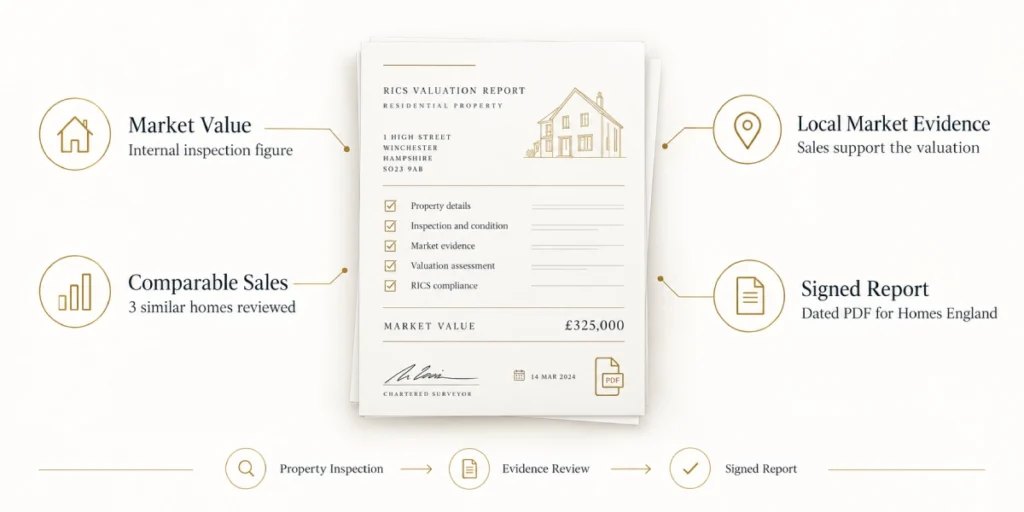
The report must also be supplied as a PDF or another digital format that cannot be edited.
These Help to Buy property valuation requirements carry weight. The administrator can reject a report that does not meet them, or one that looks too high or too low against similar homes. You then pay for a new report.
How Long Does a RICS Valuation for Help to Buy Take?
When homeowners ask ‘how long does a Help to Buy valuation take,’ they usually mean two separate things: the valuation itself and the wider repayment.
The inspection of a standard house or flat is fairly brief. Most firms issue the written report within a few working days. Ask about turnaround when you book, particularly if you are working to a sale date.
The full redemption takes longer, often several weeks from application to completion. Missing or incomplete paperwork is the usual cause of delay.
How Long Is a Help to Buy RICS Valuation Valid?
A standard report is valid for three months from the date it is produced. If it expires before your repayment completes, you have two weeks from the expiry date to ask the same valuer for an extension.
Validity and extension options:
| Option | How long it lasts | Main condition |
|---|---|---|
| Original valuation report | 3 months from the date produced | Sent to the administrator within 5 working days |
| Desktop valuation | 3 extra months from expiry | Same valuer; requested within 2 weeks of expiry; at least 6 comparables if the value has changed |
| New valuation | A fresh 3 months | Needed if the extension also runs out |
(These timescales reflect Homes England’s published guidance at the time of writing (September 2026). Scheme rules can change, so always check the latest GOV.UK guidance or confirm with the loan administrator before booking.)
What Can Affect the Valuation of Your Property?
A Help to Buy valuation reflects the open market on the day of inspection. Some factors sit within your control, and others do not, but it helps to know them before the valuer arrives.
The valuer assesses your home as it stands on the day, against what similar homes nearby have sold for. Several things can move the figure:
- Condition. Wear, outstanding repairs and general upkeep are all noted at inspection.
- Local sales. With few recent comparable sales, the valuer has less evidence to work from.
- Improvements. An extension or a new kitchen can add value, and with it the amount you repay.
- Unapproved work. Alterations without planning permission or building control sign-off can raise questions.
- External cladding. Some homes need a specialist valuation before a figure can be agreed.
- Market conditions. Values move with the wider housing market, sometimes within a few months.
A tidy home makes little difference to value. Clear access to every room, loft and meter cupboard does help the inspection run smoothly.
How to Arrange a RICS Valuation for Help to Buy
Good timing and a well-chosen valuer make the whole process far easier. A little preparation before you book helps you avoid an expired report or an unexpected extension fee later on.
Why pay for a report that expires before your sale is agreed? Knowing how to get a RICS valuation for Help to Buy at the right moment saves both time and money.
- Book once you are ready to proceed, for example when you have a buyer or a mortgage offer in sight.
- Check the valuer’s RICS registration and independence before you instruct them.
- Send the valuer the Homes England criteria at the outset.
- Confirm the fee, the turnaround and the cost of any extension.
- Read the finished report against the criteria before you submit it.
Final Thoughts
A RICS valuation for Help to Buy sets how much of your home’s value returns to Homes England, so the details deserve care. The report must come from an independent, RICS-registered valuer, include an internal inspection and meet each of the published criteria.
Timing deserves the same attention. A report booked too early may expire before completion, while a late booking can hold up a sale or remortgage.
Fitzgerald Surveying Services is a RICS-registered firm providing property valuations across South East England. If you are preparing to sell, remortgage or redeem your equity loan, our team is happy to talk you through the next steps.
FAQs
Can the same valuation be used by your mortgage lender?
Usually not. Your lender will normally arrange its own valuation for lending purposes, and Homes England does not accept valuations made for bank or mortgage purposes. The two reports serve different audiences, so expect to need both when you remortgage.
Do you keep paying interest during the repayment process?
Yes. Monthly interest and management fees remain due until the equity loan is repaid in full. Any arrears must also be cleared, or a payment plan agreed, before the repayment can be completed.
Will Homes England remind you before your report expires?
Yes. If your valuation report is close to expiring, the loan administrator will write to you and ask for a desktop valuation. It is still sensible to track the date yourself, as the desktop report must be made within two weeks of expiry.
Do you need to be at home during the valuation?
Someone will need to give the valuer access, as an internal inspection is required. It helps to be available to answer questions about any work carried out since you bought the home.