Damp Survey Overview
Traditional solid masonry buildings behave differently from modern cavity wall properties, particularly in the way they absorb, retain and release moisture. Our independent damp surveys take a holistic approach, assessing the wider property rather than focusing solely on visible symptoms. Our surveyors have specialist experience investigating moisture-related defects, with relevant professional memberships including RICS, RPSA and the Federation of Damp.
Our Damp Survey Approach
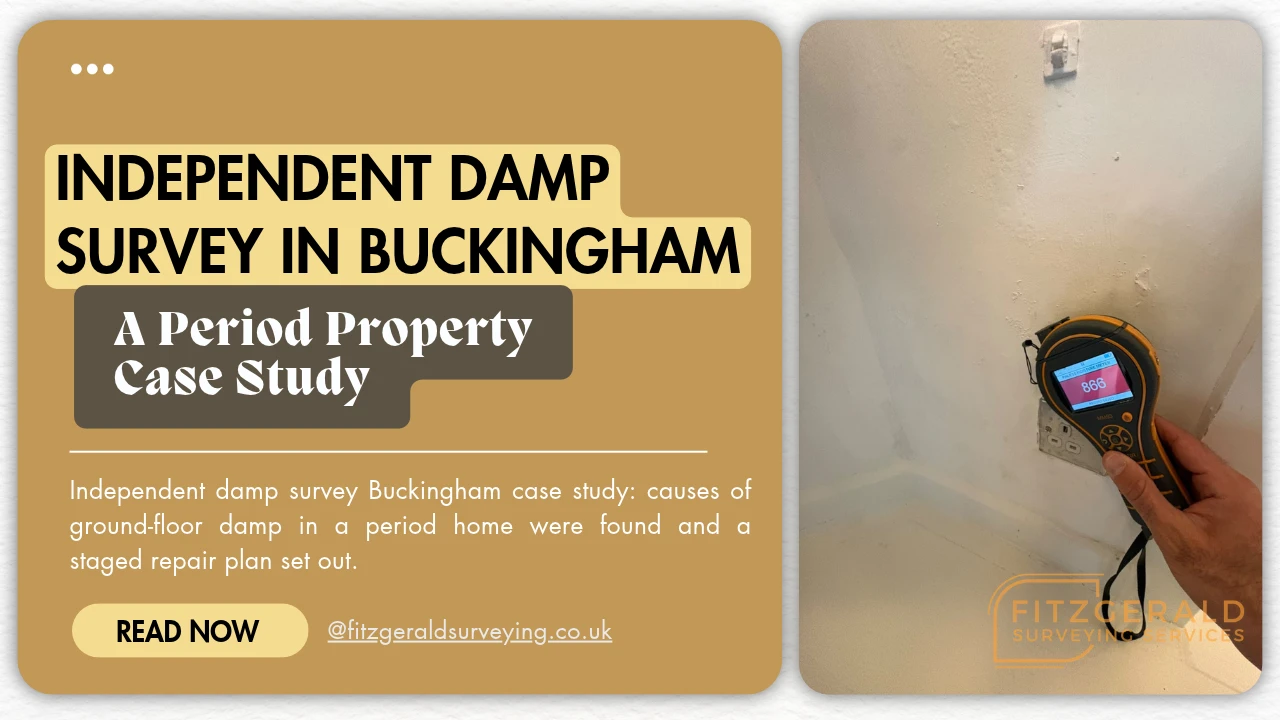
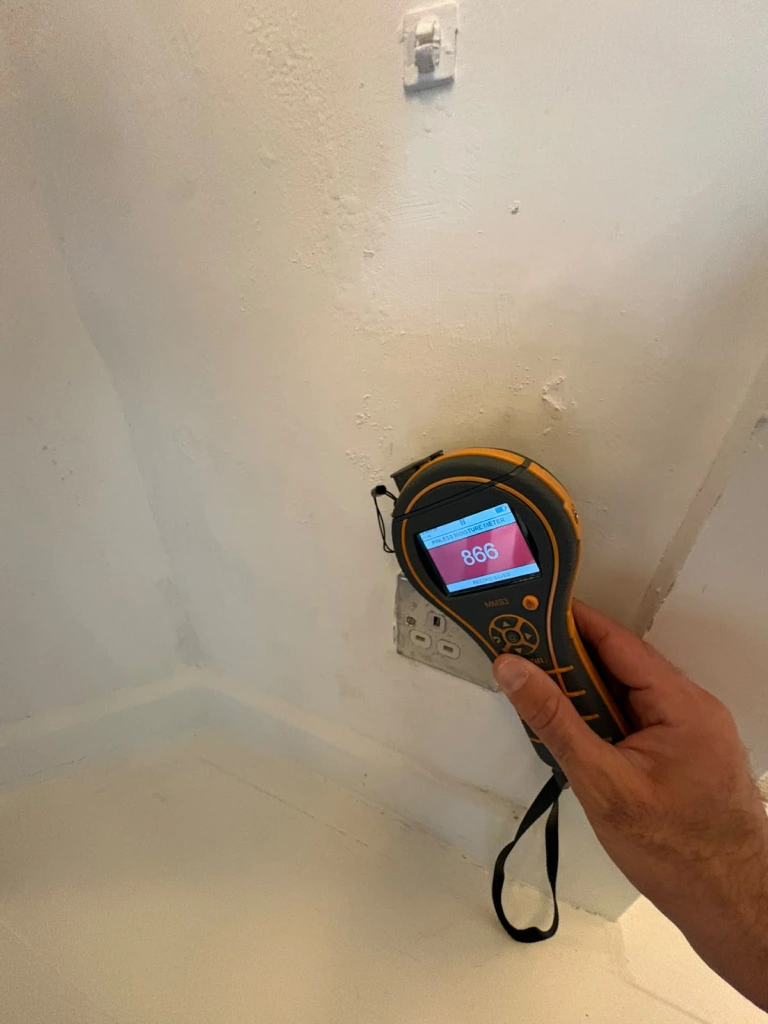
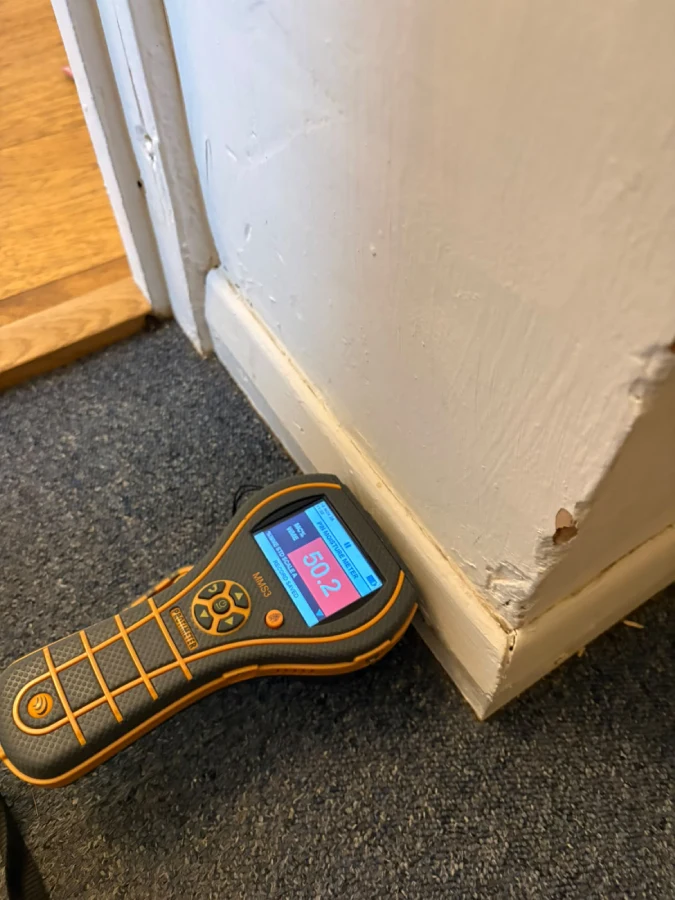
On arrival, our surveyor met the homeowners for a collaborative walkthrough to understand their concerns, the building’s history, previous alterations and any past remedial works. The investigation covered external rainwater disposal, drainage, surrounding ground conditions and accessible internal areas. Specialist equipment used where appropriate includes electronic moisture meters, thermal imaging cameras, hygrometers, anemometers and tools for safely lifting accessible drainage covers. Drones can supplement inspections where needed.
Key Findings from the Damp Investigation
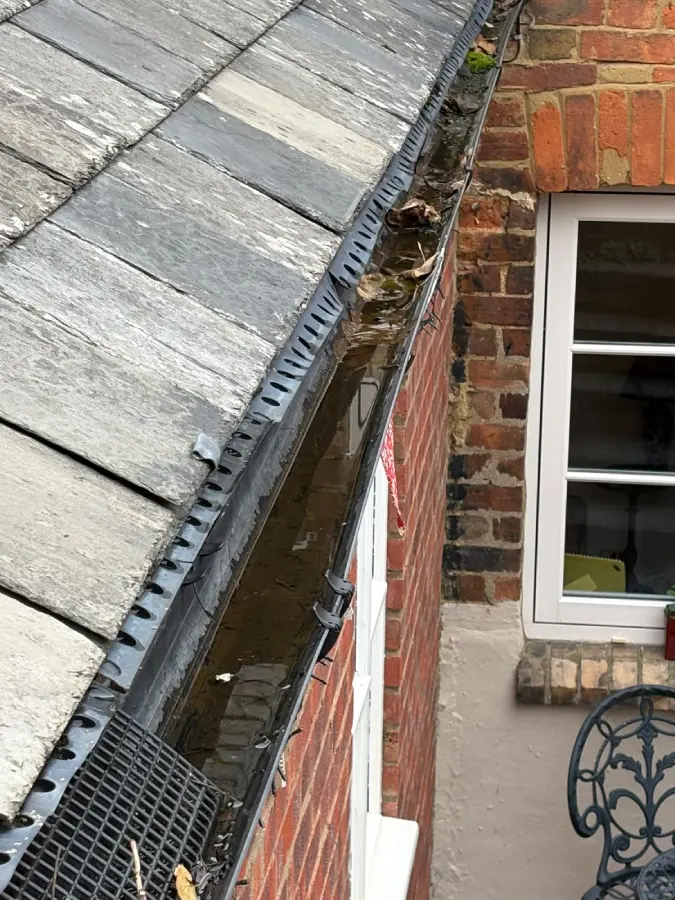
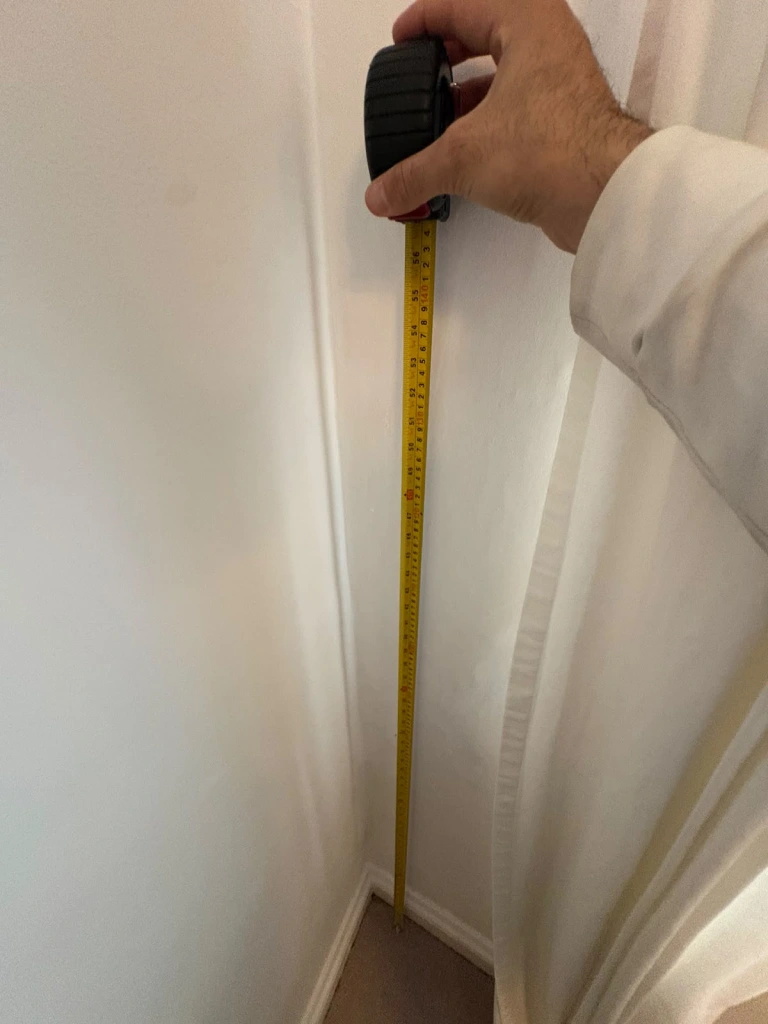
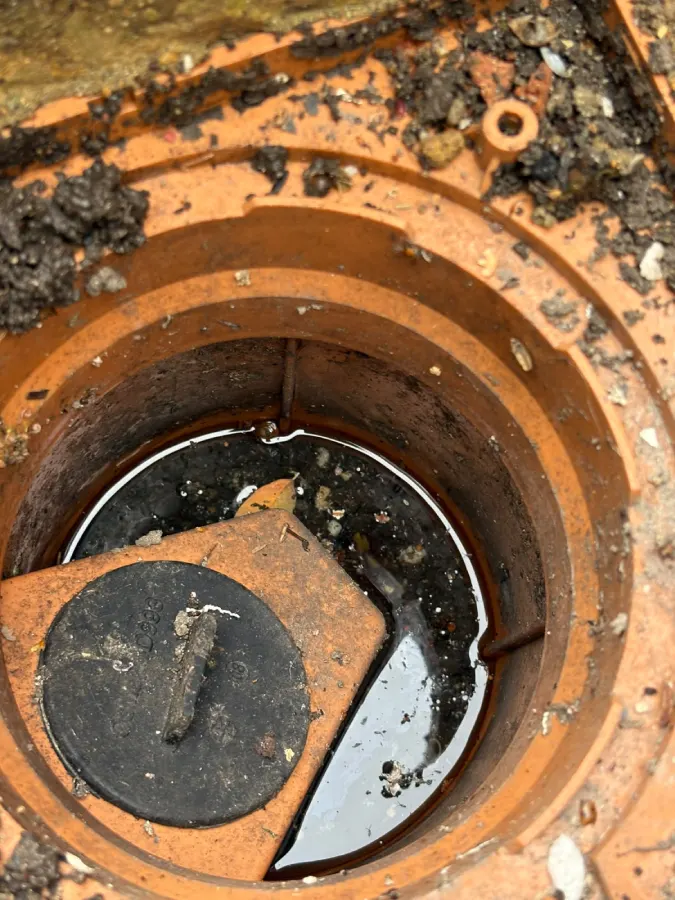
The inspection identified poorly aligned and flooded guttering, together with blocked drainage arrangements. These defects can increase moisture exposure around the building. With permission, the surveyor lifted localised sections of carpet to inspect the underlying concrete floor slab, revealing further matters requiring attention. Areas of internal plaster bridging and elevated ground levels to the rear were also identified. The findings were considered collectively, recognising that dampness in older properties often has several contributing factors.
Key Findings at a Glance
- Poorly aligned and flooded guttering increasing moisture around the building
- Blocked drainage arrangements
- Further matters revealed at the concrete floor slab beneath lifted carpet
- Internal plaster bridging across damp-proofing
- Elevated external ground levels to the rear
- Several contributing factors acting together, as is typical in older properties
Our Damp Survey Report and Recommendations
The homeowners received a detailed written report setting out observations, findings and recommendations, supported by a clearly annotated floor plan.
Crucially, the recommended works were presented in priority and chronological order. This staged approach helps clients understand which external moisture sources and drainage defects should be addressed before internal repairs or reinstatement are considered.
Why an Independent Damp Survey Matters
Dampness in traditional buildings can be misunderstood, and inappropriate treatments may fail to address its cause. This independent inspection gave the Buckingham homeowners a clearer understanding of the issues and a practical sequence of actions. Fitzgerald Surveying provides evidence-based, proportionate damp assessments throughout Buckinghamshire and the wider South East.
Frequently Asked Questions
Homeowners in Buckingham and across Buckinghamshire often ask the same things once they notice damp. The answers below explain what an independent damp survey involves and why it suits older, solid-walled homes.
What is an independent damp survey?
An independent damp survey is an impartial investigation into the causes of moisture in a property. Because it is not tied to selling a treatment, the focus is on finding the source of the problem and recommending works in a sensible order.
Why do period and solid-brick homes need a specialist damp survey?
Traditional solid walls take in and release moisture differently from modern cavity walls, so damp in a period property is easily misread. A specialist assessment looks at the whole building rather than treating the symptom on the wall.
What are the common causes of damp in an older property?
Often several things act together – blocked or poorly aligned guttering and drainage, raised external ground levels, bridged damp-proofing and poor ventilation. A survey weighs these together rather than blaming a single cause.
What equipment is used during the survey?
Where appropriate, our surveyors use electronic moisture meters, thermal imaging cameras, hygrometers and anemometers, and can lift accessible drainage covers. Drone imagery supplements the inspection where high-level areas need a closer look.
Why does the order of the recommended works matter?
External moisture sources and drainage faults are dealt with first, so internal repairs are not undone by water still entering the building. Presenting the works in priority order helps you spend on the right things in the right sequence.
Why Choose Fitzgerald Surveying
Fitzgerald Surveying is an independent, family-run practice, and our damp surveys are carried out by experienced surveyors who are members of RICS, RPSA, CIOB and FODCS (Federation of Damp Certified Surveyors). Our focus is an impartial diagnosis and a practical plan, not the sale of a single treatment.
Arrange a Damp Survey
Concerned about damp in a period or solid-brick home in Buckingham or elsewhere in Buckinghamshire? Arrange an independent damp survey with Fitzgerald Surveying Services for a clear, evidence-based plan of action.