A RICS Level 2 Home Survey gives buyers an independent assessment of a property’s visible condition, key defects, and potential risks before exchange of contracts. The RICS Level 2 Survey cost is relevant to the purchase budget, but it should be considered alongside the professional judgement the report provides. Once an offer has been accepted, questions about repairs, maintenance, and further investigation become part of the buyer’s risk assessment. For that reason, the survey’s value lies not only in its fee but in the clarity it gives before the buyer commits to the purchase.
Typical RICS Level 2 Survey Cost
The cost varies from one property to another. Before providing a quotation, surveyors consider property size, condition, construction type, location, and inspection complexity. The following ranges are typical guide ranges rather than fixed fees:
| Survey Type | Typical Guide Fee Range |
| RICS Level 2 Home Survey | £500 to £1,200+ |
| RICS Level 3 Home Survey | £600 to £1,500+ |
The RICS Level 2 Home Survey fee is generally lower than the fee for a Level 3 survey, as it is designed for conventional properties that appear to be in reasonable condition and have been built using standard construction methods.
What Is Included in a Level 2 Home Survey?
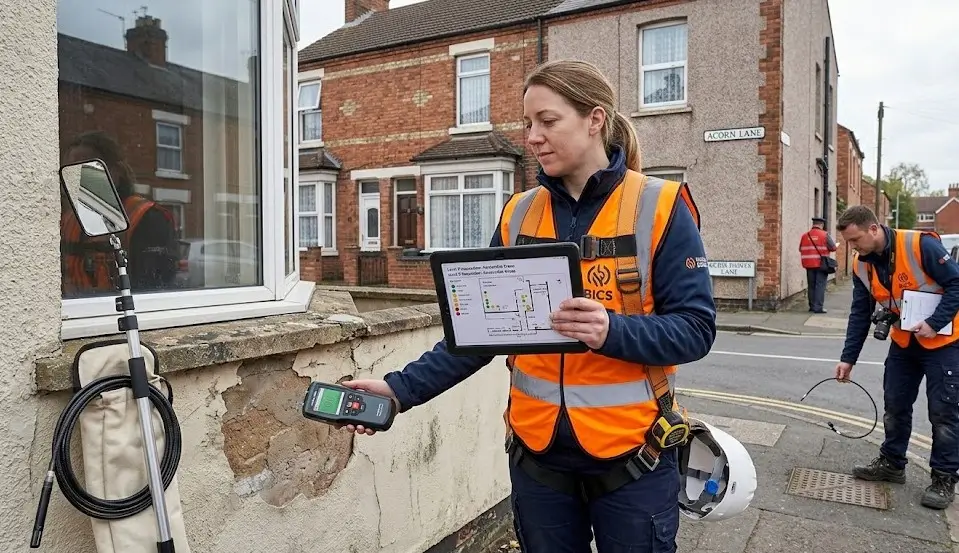
A Level 2 Home Survey is a RICS Home Survey, also known as a HomeBuyer Report, that assesses visible condition, key defects, and matters requiring further investigation where accessible. It is generally suitable for conventional residential properties built using standard construction methods and showing no obvious signs of significant alteration or deterioration.
The report typically covers:
| Area Assessed | How It Is Reported |
| Roof and exterior | The surveyor reports on evidence of deterioration or defects where accessible. |
| Walls and structure | The surveyor reviews accessible structural elements for visible defects, movement, or deterioration. |
| Damp indicators | The report identifies signs of moisture ingress where visible. |
| Timber defects | The surveyor reports on evidence of timber deterioration or defects where accessible. |
| Services | Building services are visually observed only and are not tested. |
| Repair advice | The report provides condition ratings and advice on repairs or further investigation where required. |
Indicative Fee Guide by Property Value
Property value is one of several factors that can influence the survey fee. Surveyors also consider the property’s size, region, condition, construction type, and inspection complexity before confirming a quotation.
| Property Value | Typical Guide Fee Range |
| Up to £150,000 | £500–£600 |
| £150,000–£300,000 | £500–£700 |
| £300,000–£500,000 | £600–£900 |
| £500,000+ | £800–£1,200+ |
Fees may vary by surveyor, region, property condition, and the level of professional assessment required.
Is a Level 2 Survey Suitable for Every Property?
A RICS Level 2 Home Survey is not appropriate for every property. The decision should be based on the property’s condition, construction type, age, alteration history, and visible risk indicators, rather than fee alone.
A Level 2 survey generally suits properties that follow conventional construction methods and show no obvious signs of significant alteration or deterioration.
| Property Type | Typical Survey Choice | Professional Reasoning |
| Modern flat | Level 2 | Suitable where construction is standard and no significant defects are apparent. |
| Conventional house | Level 2 | Appropriate where the property is conventional in type, condition, and access. |
| Modern detached property | Level 2 | Suitable where the property has standard construction and no evident alteration risk. |
| Listed building | Level 3 generally appropriate | Listed buildings can involve structural complexity, historic fabric, restricted access areas, and hidden defect risk. |
| Property with major alterations | Level 3 generally appropriate | Major alterations can increase structural complexity and may conceal defects within altered areas. |
| Non-standard construction | Level 3 generally appropriate | Non-standard materials or construction methods require a wider level of inspection and professional assessment. |
The survey type should reflect the property’s actual condition, construction complexity, and inspection risk. Selecting the correct level of survey helps the buyer obtain the information needed for an informed purchasing decision at the pre-exchange stage.
What Affects the Cost of a Level 2 Survey?
Fees are assessed on a case-by-case basis depending on inspection complexity. Each property presents a different level of work, and that directly influences the final quotation.
Several factors can increase or reduce the cost of a Level 2 survey.
| Property Scenario | Potential Impact on Cost |
| Modern flat in standard construction | Lower end of the range due to reduced inspection time requirement |
| Large detached property | Higher fee due to greater floor area and longer inspection time |
| Period property with alterations | Higher fee due to construction complexity and hidden defect risk |
| Property in a higher-value market | Higher survey fee due to regional pricing variation and professional liability considerations |
| Unusual construction materials | Additional assessment required due to non-standard construction complexity |
A quotation should reflect the inspection time, reporting detail, property risk, and professional assessment required for the specific property.
Why the Cheapest Survey Is Not Always the Best Value
A lower survey fee should be assessed against the inspection scope, reporting detail, and professional judgement required for the property. A survey that is too limited for the property may leave important repair, maintenance, or further investigation issues unresolved before the exchange of contracts.
For that reason, the survey should be viewed as a source of professional assessment rather than simply another expense. The suitability, scope, and thoroughness of the inspection determine value, not the fee alone.
Final Thoughts
The purpose of a RICS Level 2 Home Survey is to support an informed purchasing decision before the buyer becomes legally committed. It gives the buyer a professional assessment of the property’s visible condition, key defects, and matters that may require repair or further investigation.
A suitable survey should be selected according to the property’s condition, construction type, and level of risk, not by fee alone. Used at the right stage, the report helps the buyer understand whether the property remains a sound purchase before they become legally committed.
Frequently Asked Questions
How Much Does a Level 2 Survey Cost?
There is no single fixed fee for a RICS Level 2 Home Survey. As a typical guide, fees often start from around £500, with higher quotations applying where the property requires greater inspection time, more detailed reporting, or additional professional assessment.
Do Level 2 Survey Costs Vary Between Properties?
Level 2 survey fees can vary because the surveyor must assess the property before confirming the appropriate quotation. A straightforward modern flat will not require the same level of inspection as a larger, older, altered, or more complex property.
What Influences the Level 2 House Survey Cost?
The fee is influenced by the level of inspection work required. Property size, construction complexity, visible risk, access, and location can all affect the surveyor’s judgement when preparing a quotation.