
Overview
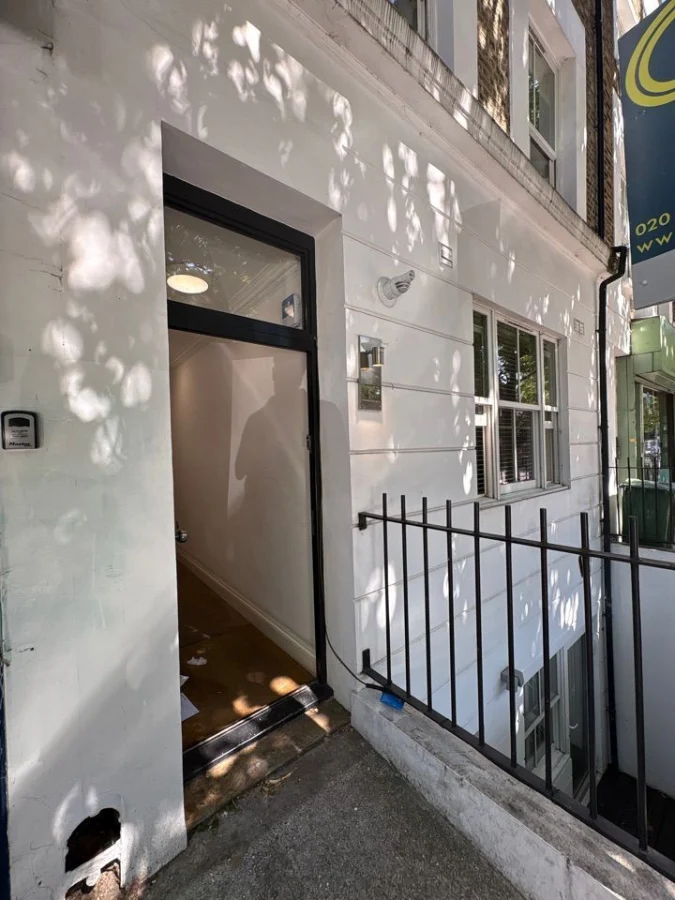
Buying a flat in a converted London building involves different considerations from purchasing a freehold house. A leaseholder may be responsible for contributions towards roof repairs, external masonry, rainwater goods and other shared parts, depending on the lease and management arrangements. As building surveyors working across London, we are regularly instructed on leasehold flat and converted-property purchases, where the shared structure deserves as much scrutiny as the rooms inside.
The client wanted a surveyor familiar with this type of property and able to explain both the defects within the flat and any visible issues elsewhere in the building that could result in future expenditure.
Our Response
We allocated a London-based surveyor with experience inspecting converted residential buildings and leasehold flats. This was important because the survey needed to consider the building as a whole, while recognising that access to communal and other privately occupied areas may be restricted.
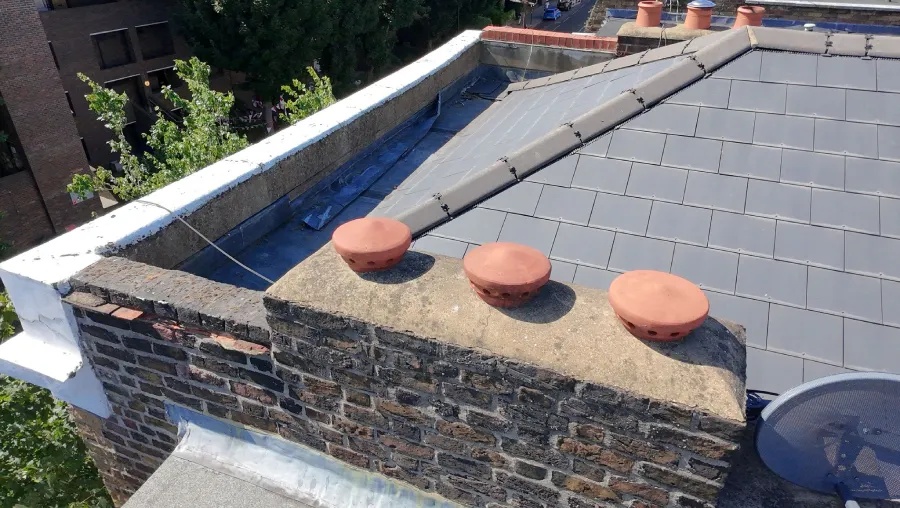
The inspection included the accessible parts of the flat and relevant external elements. Drone imagery was used, where safe and permitted, to inspect high-level areas including roof coverings, chimney stacks, parapet walls, upper windows and rainwater goods. Thermal imaging was also used as a supplementary assessment of the building envelope. The inspection was booked approximately one week after the original enquiry, with the report scheduled for completion within five working days of inspection.
Method in Brief
- Leasehold-Focused Level 3 Inspection: Detailed assessment of the flat and accessible wider building elements, with attention to potential shared repair liabilities.
- Drone High-Level Assessment: Aerial inspection of roof coverings, parapets, chimney masonry and rainwater goods where access and conditions permitted.
- Thermal Imaging: Supplementary review of temperature patterns and possible areas of thermal weakness or moisture-related concern.
- Defect and Liability Reporting: Practical advice on repairs and matters for the solicitor or managing agent to clarify before exchange.
Outcome & Deliverables
The principal defects related to localised moisture ingress rather than major structural movement. Elevated moisture readings were recorded in isolated wall areas, with visible evidence suggesting moisture entering from external sources. Likely contributing factors included defective rainwater goods, external detailing and bridging at vulnerable wall junctions.
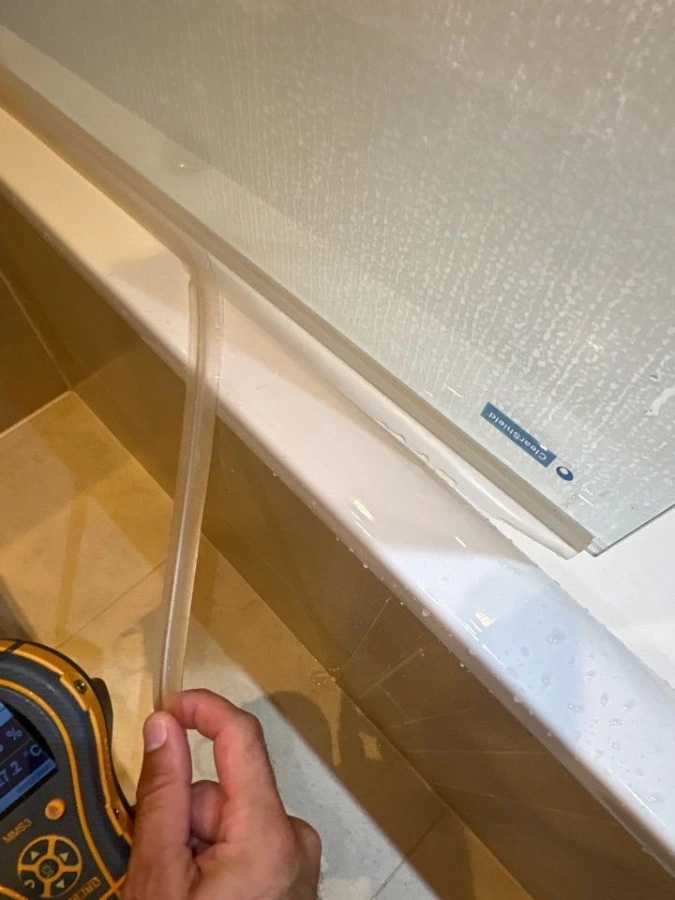
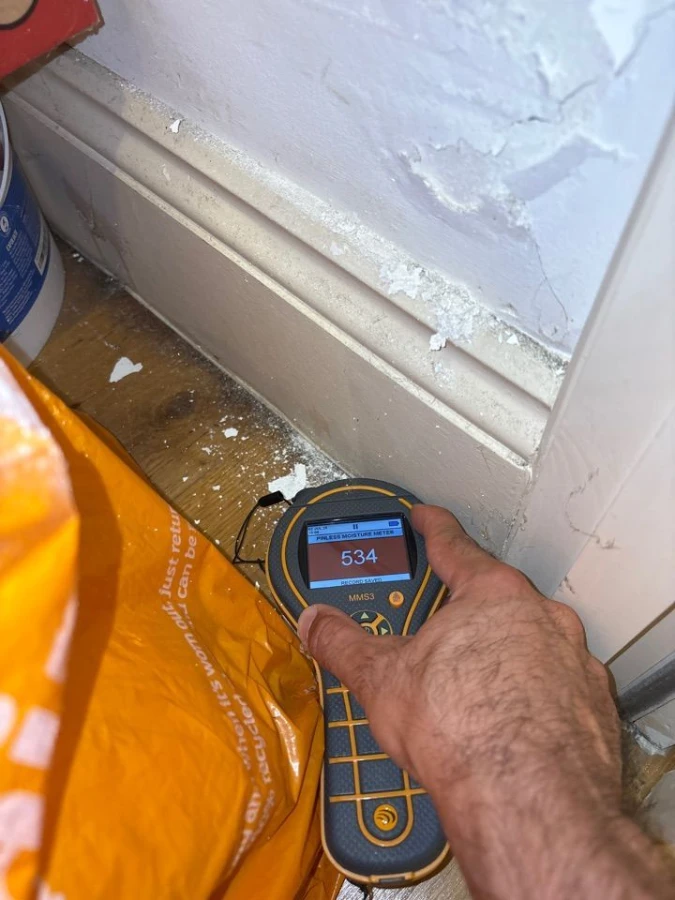
These issues appeared manageable, provided the external sources were addressed before internal finishes were repaired.
Key Findings
- Localised moisture ingress in isolated wall areas, traced to external sources
- Defective rainwater goods and external detailing as likely contributing factors
- Bridging at vulnerable wall junctions allowing moisture to cross
- Poorly performing bathroom extraction causing condensation and localised mould
- Roof coverings generally serviceable, with parapet walls and chimney masonry to be maintained in future
- Shared external elements that may give rise to future service-charge contributions
Bathroom extraction was also performing poorly, contributing to condensation and localised mould growth. Improvements to ventilation were recommended. The roof coverings appeared generally serviceable, although future maintenance of parapet walls, chimney masonry and other communal external elements would need to be anticipated.
Our report explained the findings and highlighted the need for the purchaser’s solicitor to review the lease, service charge accounts, reserve fund and any proposed major works. The condition survey could identify visible defects, but could not establish the purchaser’s contractual liability for shared repairs without those documents.
Why It Matters
The condition of a flat cannot sensibly be assessed in isolation from the rest of its building. Repairs to shared roofs, parapets and external masonry may be arranged by the freeholder or managing agent and can lead to substantial service-charge demands. By identifying visible external maintenance requirements alongside the flat’s internal defects, the survey gave the client a better basis for asking the right questions about planned works and future costs before proceeding.
Frequently Asked Questions
Buyers of flats in Camden and across London tend to raise the same points before they commit. The answers below set out how a Level 3 Building Survey looks at both the flat and the building it sits within.
What is a Level 3 Building Survey?
The Level 3 Building Survey is the most thorough of the RICS home surveys. It looks closely at a property’s construction and condition, explains the cause and seriousness of any defects and sets out the repairs involved, which makes it well matched to older, altered or leasehold properties.
Why does a leasehold flat need a Level 3 survey?
With a leasehold flat, the condition of the shared structure can affect you as much as the flat itself. A Level 3 survey considers the accessible wider building, so you understand the repairs that might later appear as service-charge contributions.
Can a survey tell me what I will pay in service charges?
No. A survey reports on the visible condition of the building, but it cannot set your contractual liability. Your solicitor should review the lease, the service charge accounts, the reserve fund and any planned major works to establish what you may be asked to pay.
Why does the condition of the whole building matter when buying a flat?
Shared roofs, parapets and external masonry are usually repaired by the freeholder or managing agent and recovered through service charges. Seeing their condition before exchange helps you weigh the likely cost of future works alongside the price of the flat.
Why are a drone and thermal imaging used on a flat survey?
A drone allows high-level parts such as roofs, parapets and chimney masonry to be inspected where they cannot be reached safely from the ground, while thermal imaging helps flag areas of heat loss or possible moisture in the building envelope.
Why Choose Fitzgerald Surveying Services
Fitzgerald Surveying Services is an independent, family-run practice whose surveyors are members of RICS, RPSA, CIOB and FODCS (Federation of Damp Certified Surveyors). For leasehold buyers in London, that means an impartial assessment of both the flat and the building around it.
Arrange Your Survey
Considering a leasehold flat in Camden or elsewhere in London? Talk to Fitzgerald Surveying Services about a Level 3 Building Survey before you exchange.